
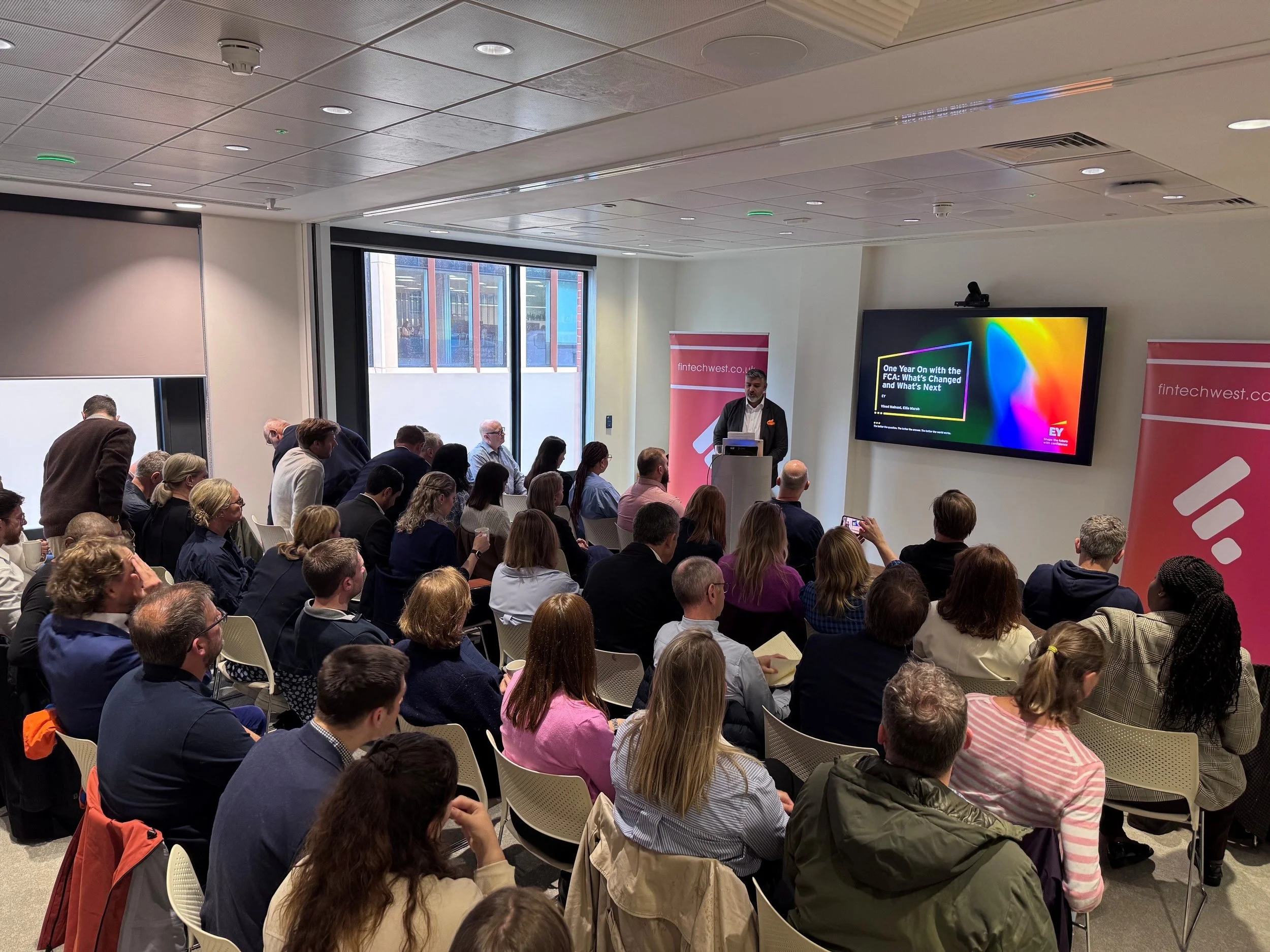
A packed room of founders, financial institutions, advisers and ecosystem partners gathered in Bristol recently for a joint Financial Conduct Authority (FCA), EY and FinTech West event exploring how regulation is evolving to support innovation, growth and competitiveness across the UK FinTech sector.
Hosted by EY, the session featured insights from Ellie Marsh and Vinod Nainani (EY), alongside Sebastian Ricketts and Gary Hurst from the FCA, who shared updates on the regulator's innovation services, regulatory pathways, AI initiatives and the newly launched Scale-Up Unit.
The event also marked a significant increase in engagement since the FCA's previous visit to Bristol, reflecting growing interest from founders and scale-ups looking to better understand how regulation can support, rather than hinder, growth.
What the ecosystem told the FCA
One of the most valuable parts of the session came from EY's recent review of the FCA's Innovation Services.
Drawing on interviews with more than 40 organisations across the UK FinTech ecosystem, including founders, investors, accelerators, trade bodies and professional services firms, the research explored how the FCA is perceived and where further improvements could be made.
The findings were encouraging
The FCA continues to be viewed as a globally respected regulator with a strong reputation for supporting innovation. The Regulatory Sandbox remains highly regarded, and the regulator's increased presence at industry events is being noticed and welcomed.
However, the research also highlighted opportunities for further improvement.
Many firms still find it difficult to navigate the range of innovation services available. Others are unsure when they should engage with the regulator or which programmes are most relevant to their stage of growth.
As Ellie Marsh explained: "It's not just about responding to regulation any more, it's increasingly about how you engage with it."
A recurring theme from participants was the desire for greater visibility, clearer pathways and more opportunities for dialogue.
EY also found that some founders still perceive the FCA as intimidating, which can discourage early engagement. This is particularly important because one of the strongest messages from the FCA throughout the event was the value of engaging sooner rather than later.
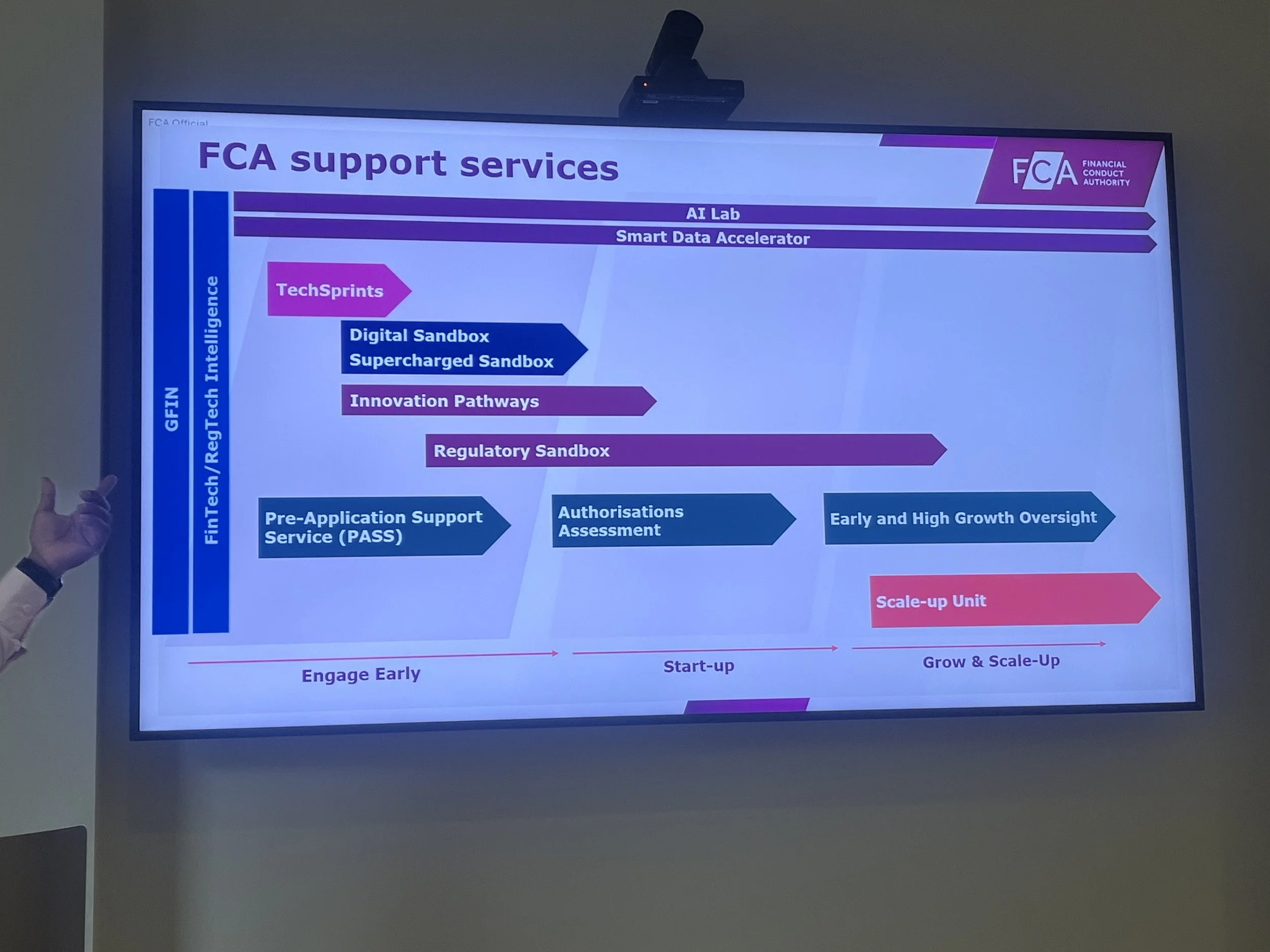
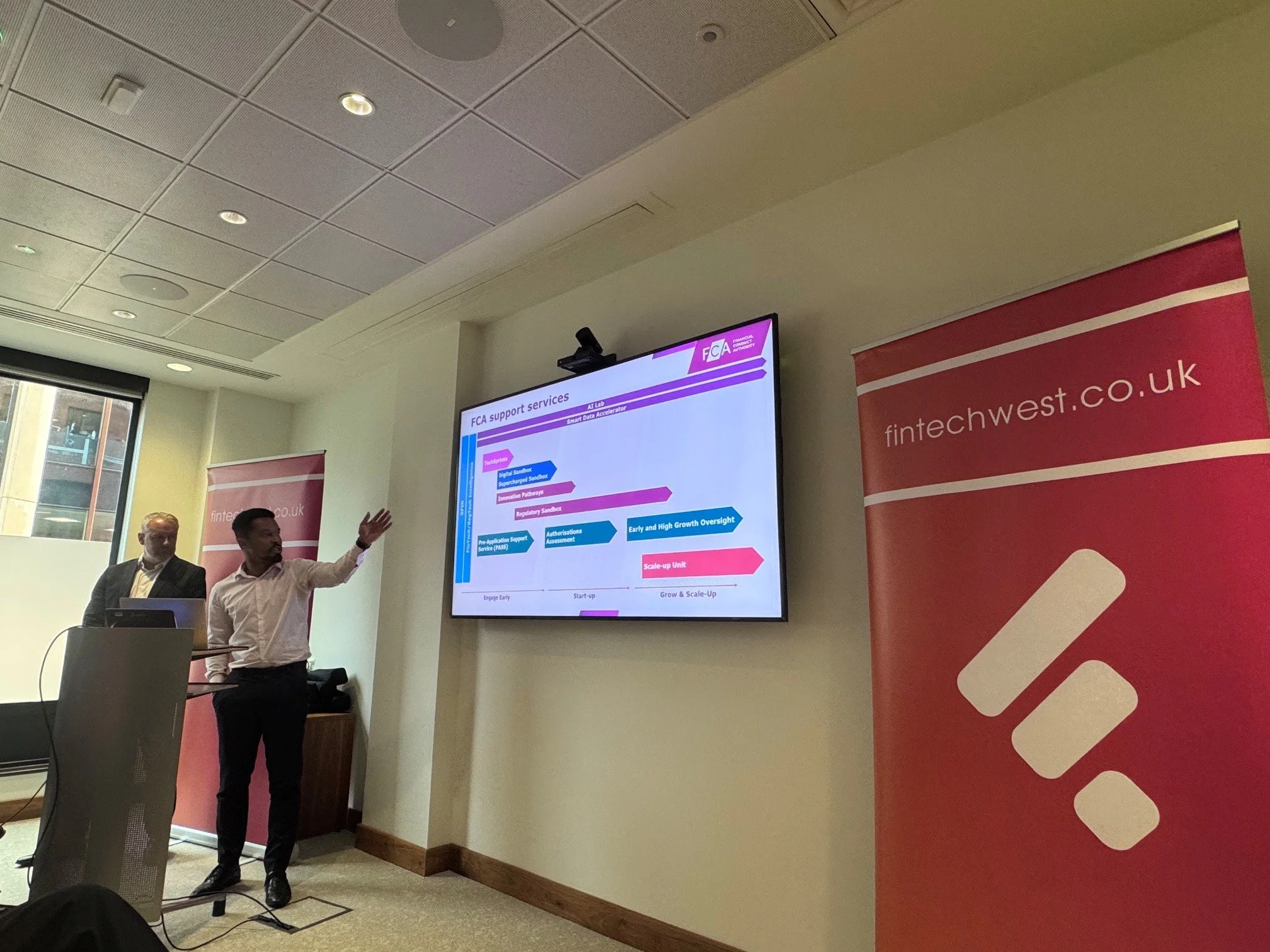
The FCA's innovation toolkit continues to grow
Over the past decade, the FCA has built one of the world's most extensive innovation support programmes.
Today, firms can access support through initiatives including:
Innovation Pathways
Regulatory Sandbox
Digital Sandbox
AI Lab
Smart Data Accelerator
Pre-Application Support Service (PASS)
FCA/PRA Scale-Up Unit
Collectively, these programmes have supported more than 1,000 firms and helped establish the UK as one of the world's leading environments for financial innovation.
A particularly interesting discussion focused on the FCA's newer initiatives designed to support firms beyond the startup phase.
Historically, much of the support available has focused on helping firms get started. Feedback gathered by EY suggested that many founders feel support becomes less visible as businesses begin to scale.
In response, the FCA and Prudential Regulation Authority have launched a dedicated Scale-Up Unit aimed at helping high-growth firms navigate regulatory challenges as they expand.
This reflects a broader shift in thinking.
As Vinod Nainani noted during the session, regulation and innovation are becoming increasingly interconnected, with regulators expected not only to manage risk but also to support competitiveness and growth.
The FCA also highlighted its recently published Innovation Insights Report 2025, which explores emerging trends, opportunities and challenges across financial services innovation.
For founders, scale-ups and innovation leaders, the report provides valuable insight into how firms are adopting new technologies, engaging with regulatory innovation programmes and navigating an increasingly complex regulatory landscape. It is well worth a read for anyone building or scaling within financial services.
You can download the Innovation Insights Report 2025 here.
AI moves from theory to practice
Unsurprisingly, artificial intelligence featured heavily throughout the morning.
The FCA shared updates on its AI Lab, AI Live Testing programme and the Supercharged Sandbox, which provides firms with access to enhanced computing environments to test and develop AI solutions.
Importantly, the regulator's focus remains outcome-based rather than technology-based.
Whether a decision is made by a person, an algorithm or an AI agent, firms remain responsible for delivering fair consumer outcomes, maintaining appropriate governance and managing risk effectively.
The discussion also explored the emergence of agentic AI and agentic payments, areas that could significantly reshape financial services over the coming years.
The FCA is not only engaging with these technologies externally but is also experimenting internally. EY shared examples of work supporting the FCA's Economics Division in exploring how generative AI and future agentic capabilities could improve productivity, enhance research and support judgement-led decision-making.
What founders should take away
If there was one consistent message throughout the event, it was this:
Engage earlier.
The FCA repeatedly encouraged firms to use the support available before submitting applications, launching products or encountering regulatory challenges.
For founders, that means:
Engage with the FCA before problems emerge
Use services such as PASS and Innovation Pathways
Think about governance and compliance as growth enablers, not barriers
Build regulatory considerations into product development from the outset
View the regulator as part of the ecosystem, not simply an approval process
As one speaker observed, the conversation is increasingly shifting from regulatory compliance to regulatory engagement.
The UK's opportunity
The UK remains one of the world's leading FinTech markets and continues to attract significant levels of investment and innovation.
As Sebastian Ricketts highlighted during the discussion, the UK remains the second-largest destination globally for FinTech investment, behind only the United States.
Maintaining that position will require continued collaboration between regulators, innovators, investors and ecosystem partners.
Events such as this demonstrate the value of bringing those groups together to have open, practical conversations about the opportunities and challenges ahead.
Need help navigating the regulatory landscape?
One of the strongest messages from the session was the importance of engaging early.
Whether you're exploring FCA authorisation, considering Innovation Services or preparing to scale a regulated business, FinTech West works closely with founders, regulators, investors and ecosystem partners across the South West and beyond.
We're keen to hear your thoughts, learn more about your experiences, and understand where additional support, connections or activity could make a difference, so please get in touch.