
Meet the Funder: What VCs Really Look For (and how founders should respond)
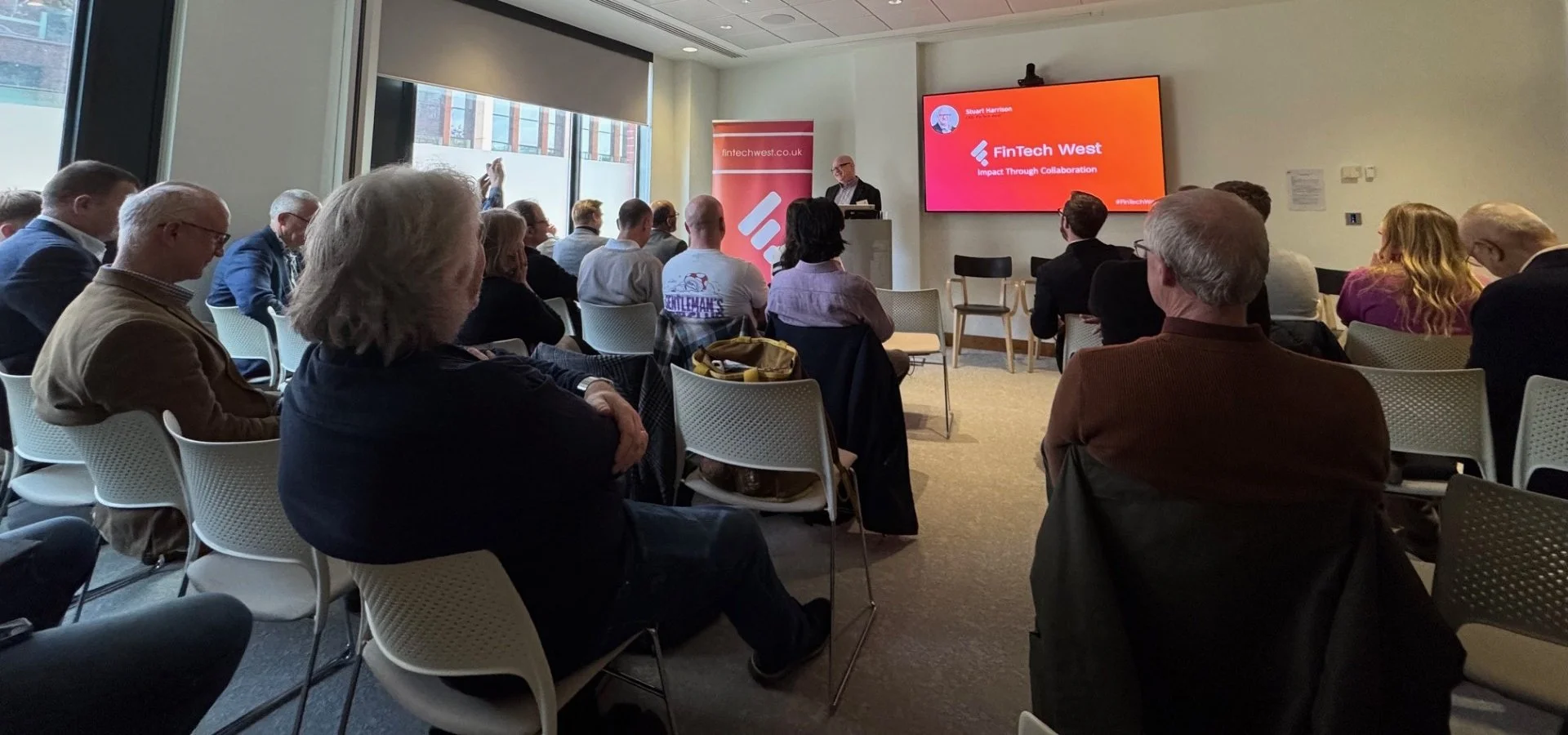
FinTech West, in partnership with the British Business Bank, brought together founders, scale-ups and active investors for a more substantive version of the traditional “meet the investor” format, with the session led by Ed Tellwright.
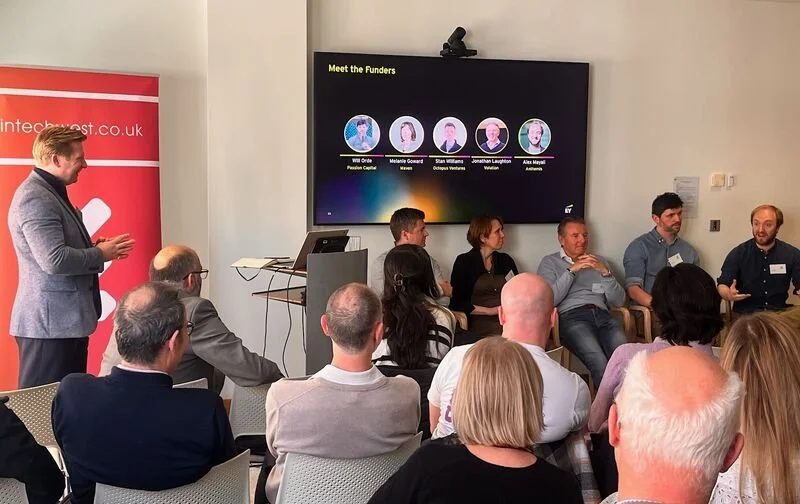
The panel featured investors including Will Orde from Passion Capital, Melanie Goward from Maven Capital Partners, Stan Williams from Octopus Ventures, Jonny Laughton from Volution Ventures, and Alex Mayall from Anthemis Group.
The goal was simple: move beyond pitch theatre and into real conversations, practical insight and genuine deal flow.
This article distils what founders need to know when raising funding today, with clear takeaways across pre-seed, seed and Series A+.
1. Start with how the funding ecosystem actually works
A key point often misunderstood:
The British Business Bank does not invest directly into startups
It acts as a limited partner (LP), backing venture funds and lenders
Founders should focus on those delivery partners (VCs) when raising
This matters because it shapes how capital flows and where founders should spend their time.
Alongside this, the panel reinforced that not all VCs are the same. Each has different:
Stages (pre-seed → growth)
Cheque sizes
Sector focus
Risk appetite
For example:
Passion Capital: early-stage fintech, ~£400k–£500k
Octopus Ventures: broad stage, from ~£100k upwards
Maven Capital Partners: regional + national, £150k–£20m
Volution Ventures: later stage, ~£2.5m initial
Anthemis Group: pre-seed & seed, £700k–£3m rounds
Takeaway: fundraising starts with targeting the right investor, not just any investor.
2. What changes across pre-seed, seed and Series A
While every business is different, the expectations shift clearly by stage.
Pre-seed
Decision is founder-led
Minimal formal diligence
Increasing openness to solo founders (driven partly by AI capability)
Strong focus on:
learning speed
hiring potential
clarity of thinking
One insight that stood out: investors are backing founders who can hire A-players, not just build product themselves.
Seed
Early traction becomes important
Investors look for:
initial product-market fit signals
customer validation
first meaningful revenue (often ~£100k+)
Founder salary expectations also emerge here:
Typical range: £60k–£100k
Too low → risk (financial stress)
Too high → concern (capital misuse)
Series A and beyond
Data replaces narrative
Focus shifts to:
revenue scale (often £4–5m+)
growth rates
repeatability of sales
Diligence becomes more structured, often including third parties.
Takeaway: early stages are about belief, later stages are about proof.
3. Growth matters more than timing
One of the clearest signals from the panel:
Investors are flexible on how long it takes to get started
They are not flexible on growth once it starts working
What matters:
£0 → £100k revenue: can take time
£100k → £1m → £10m: must accelerate
In regulated sectors like fintech, delays (e.g. FCA authorisation) are expected. But once live, momentum is everything.
Takeaway: it’s not about starting fast, it’s about scaling fast once you start.
4. The founder story, without the jargon
“Founder story” is often overused, but the panel broke it down clearly.
Investors are asking:
Is the problem real and meaningful?
Is the solution genuinely better?
Can this become a venture-scale business?
That’s it.
But delivery matters just as much:
Can you explain it clearly (no jargon)?
Can someone else repeat it internally?
Can you sell it to:
investors
customers
hires
One nuance that stood out: your story must translate internally within a VC firm. If the partner cannot clearly explain it to their investment committee, the deal often fails.
Takeaway: clarity and repeatability of your story are critical.
5. Fundraising is a network game, not a pitch exercise
Across all investors, one theme was consistent:
The vast majority of deals come through warm introductions
Cold outreach rarely converts on its own
Strong sources of introductions include:
other founders
existing investors
lawyers, advisors, ecosystem connectors
A practical approach founders can use:
Always ask: “Who else should I speak to?”
Turn one conversation into two, then four, then eight
Run fundraising as a full-time, structured process
One investor described it as a “militaristic discipline” exercise.
Takeaway: success comes from building momentum across conversations, not chasing one yes.
6. Due diligence: what actually breaks deals
Contrary to expectation, most deals don’t fail because of technical issues.
They fail because of trust.
Common issues:
overstated traction or contracts
inconsistent messaging
weak or conflicting references
Other friction points:
messy cap tables or option pools
overly complex legal structures
unclear ownership across entities
But most of these are fixable.
What isn’t fixable:
a breakdown in trust early in the relationship
Takeaway: transparency beats perfection.
7. Fractional vs full-time: what investors really think
This came through in several discussions and questions.
Fractional roles can work:
in early stages
for specialist functions (e.g. compliance)
But investors expect:
a clear path to building a core, committed team
evidence that the founder can hire and retain strong people
Concerns arise when:
key roles (especially product/tech) remain fractional too long
the business lacks long-term ownership in critical functions
One investor framed it simply:
“We’re backing founders who can build teams, not just assemble them.”
There is also a deeper point:
early team dynamics matter
“assembled” teams without shared history can break under pressure
Takeaway: fractional can start the journey, but it cannot be the destination.
8. What signals strength (and what doesn’t)
Positive signals
strong learning velocity
clear customer validation
ability to attract talent through mission
consistent execution vs promises
The EY research reinforced:
culture is a learning system, not a slogan
mission attracts and retains talent (even in B2B)
hiring for attitude often outperforms hiring for perfect CVs
Common red flags
“about to sign” deals that never materialise
over-reliance on big-name advisors with little involvement
overly engineered structures (e.g. unnecessary Delaware setups)
rigid valuation expectations and artificial deadlines
decks full of jargon and unclear positioning
Takeaway: investors look for evidence, not optics.
9. How VCs think about returns, risk and follow-on
Understanding this helps founders position themselves better.
Returns
Funds typically target ~3x overall return
Individual deals:
3x–10x expected
top performers return the entire fund
Growth vs profitability
Profitability is not required early
Reinvestment into growth is expected
What matters is trajectory and market response
Follow-on funding
Internal support alone is not enough
External investors validate progress
A key question investors ask:
“Is there a credible next round here?”
Takeaway: you are always building towards the next milestone, not just this round.
10. Practical advice founders should act on now
Fundraising strategy
target investors by stage and thesis
build warm introductions
run a structured, time-bound process
Timing
raise when momentum is strong
avoid raising when cash is critically low
Capital decisions
don’t over-optimise for dilution early
consider taking slightly more capital for runway
Execution
keep the business performing during fundraising
don’t let growth stall while raising
Communication
say what is true, not what might happen
keep messaging simple and repeatable
Takeaway: the best fundraises are built on momentum, not urgency.
Closing: building from the South West, competing globally
What came through clearly is that the South West fintech ecosystem is no longer emerging, it is competing.
Investors are paying attention. Capital is available. But expectations are sharper, and competition is higher.
For founders, the opportunity is real:
access to active investors
a collaborative regional ecosystem
growing national and international visibility
For FinTech West, the role is equally clear:
connect founders with capital
create environments for meaningful conversations
help translate regional strength into global opportunity
If you’re building, scaling or raising:
join the FinTech West community
attend upcoming events
tap into the network for introductions, insight and support
Because in today’s market, access, relationships and clarity are not advantages, they are prerequisites.