
Future of Payments 4 - Ashfords LLP and FinTech West
On Wednesday 28th January, FinTech West hosted its fourth "Future of Payments" event at Ashfords’ offices in Bristol, bringing together industry leaders to discuss the rapidly evolving landscape in this fast moving area of FinTech.
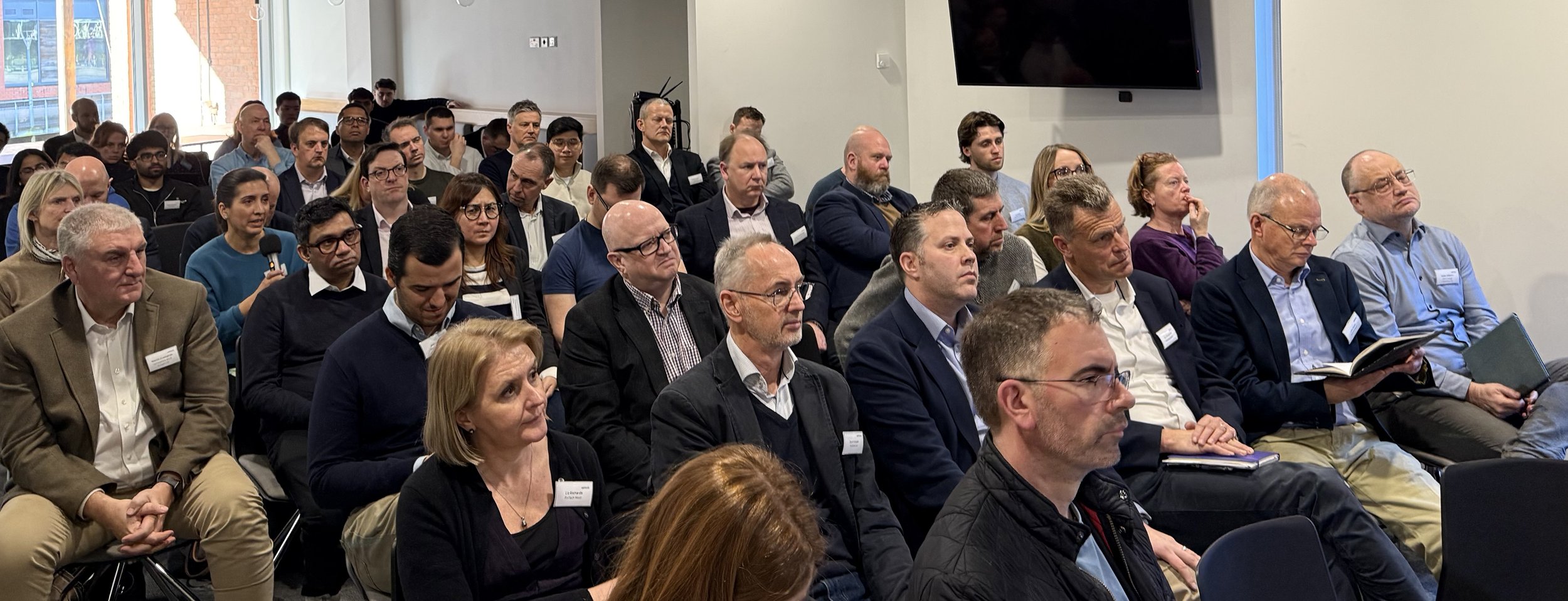
Chaired by Julian Wells, Director of FinTech West & Whitecap Consulting, the event covered important insights and updates ranging from the evolving regulatory developments to the key themes that are set to shape the future of the sector.
A Roadmap for the Next Five Years
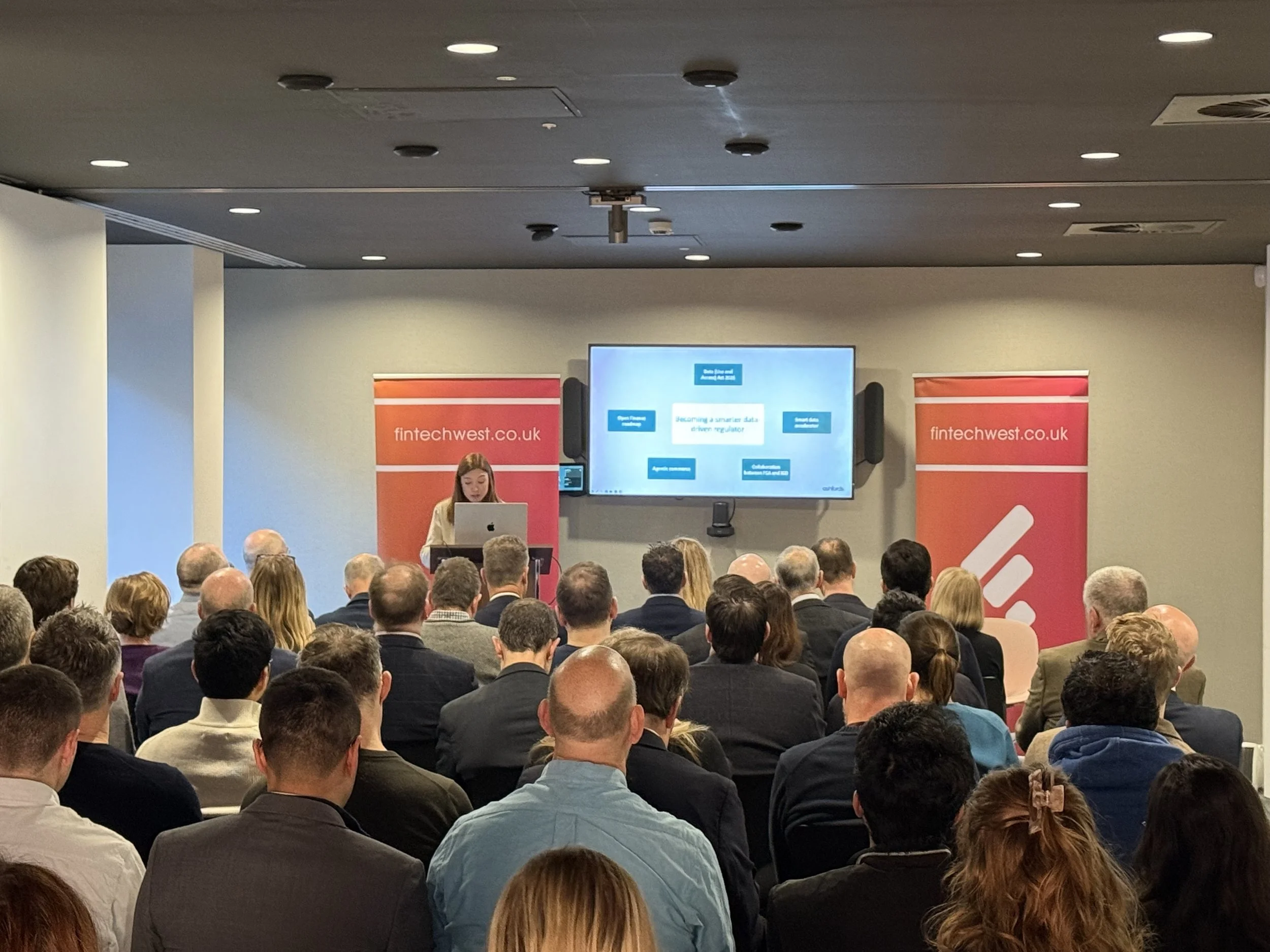
The session began with a customary regulatory update from Ashfords, delivered by Suzie Miles (Partner), who detailed the FCA’s five-year strategy. The strategy is anchored by four key themes for 2026:
Supporting sustainable growth and innovation.
Transitioning into a smarter, data-driven regulator.
Helping consumers navigate their financial lives.
Fighting financial crime through initiatives like PSD3 and tighter fraud liability.
A significant milestone for the industry is the launch of Commercial Variable Recurring Payments (CVRPs), expected in Q1 2026 with the support of 31 funding organisations. This represents the UK’s first commercial Open Banking initiative designed to provide a secure, flexible, and automated alternative to traditional payment methods like direct debits. The VRP scheme is a core component of the National Payments Vision and the broader Open Finance roadmap. It is designed to foster sustainable growth and innovation while helping the UK transition into a smarter, data-driven regulatory environment. To ensure its success, the Data Use and Access Act 2025 will provide the necessary framework for the trusted data sharing required to facilitate these automated transactions.
Speaking on the panel later in the event, Trevor Bowcher of Token described the scheme as enabling a seamless payment journey, where the payment is handled automatically in the background after an initial setup. He gave an example of being able to authorise Uber once to pay for journeys, and then being able to take future trips with no additional approvals being required, within certain parameters.
From Bristol to Global: The Creditcall Journey
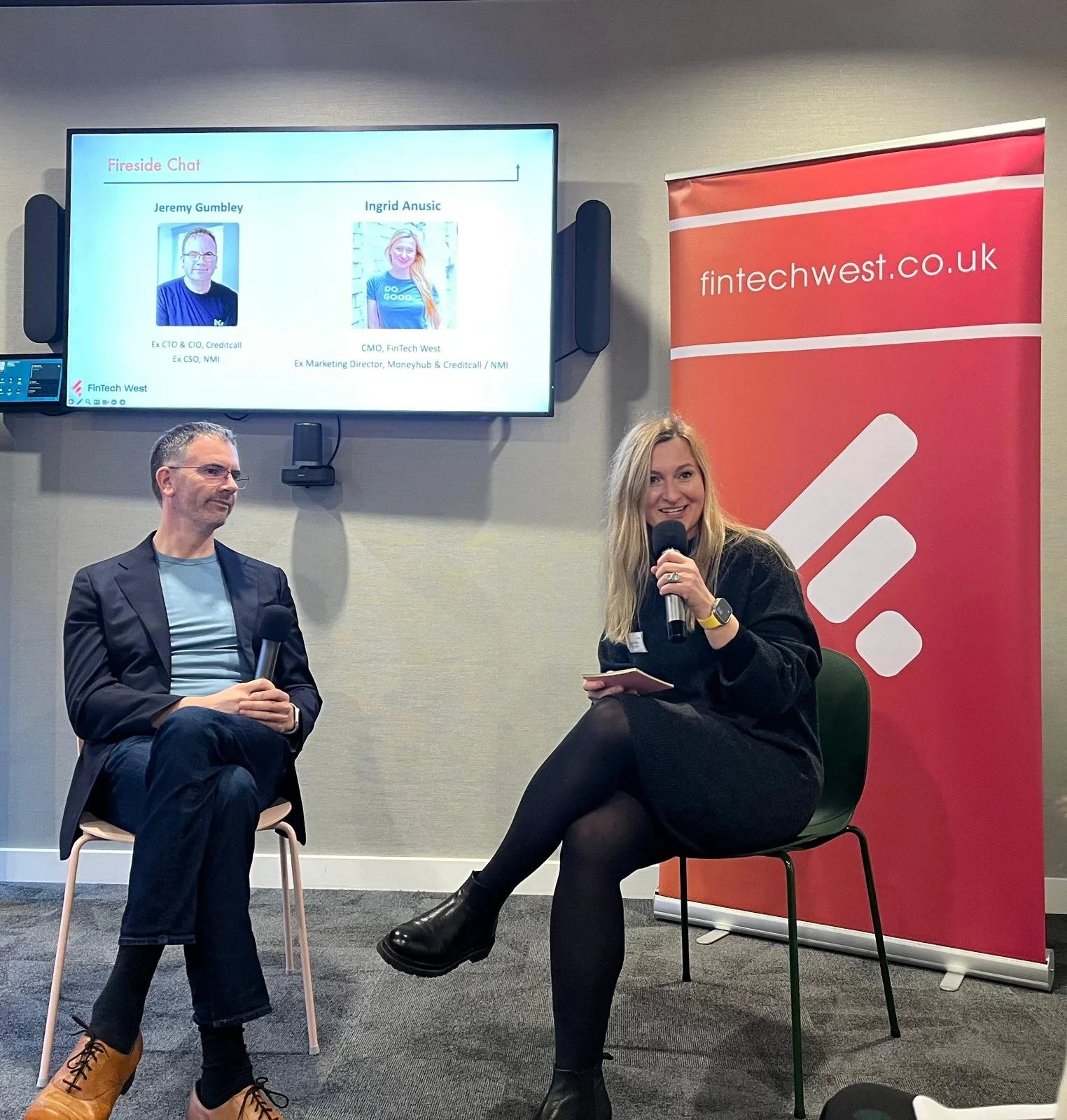
The highlight of the event was a candid fireside chat between Jeremy Gumbley (former CTO/CIO of Creditcall) and Ingrid Anusic (CMO of FinTech West, and ex Marketing Director at Moneyhub and Creditcall). They retraced the path of Creditcall, a Bristol-based FinTech that evolved from an in-room hotel telecommunications provider into a global payments powerhouse.
Jeremy shared pivotal lessons from their journey:
The Power of the US Market: A major breakthrough occurred when they secured a contract for 6,500 parking meters in Seattle - a single contract that was larger than the entire UK market opportunity at the time. This was followed by an even larger deal for 45,000 meters in New York City.
Early Pivots: The company successfully shifted from payphones to pioneering credit card authorisation via the early internet using just a 64kb BT line.
Scaling Advice: Jeremy noted that their biggest mistakes were not pivoting to the US market even sooner and failing to raise more capital early in their growth cycle.
Jeremy reflected:
“It was an incredible group of people within what was a small company. We had youth, talent and luck.”
Ingrid added that hard work was also a prominent and key component!
Founded in 1996, Creditcall was acquired by global payments giant NMI in 2018.
Mastercard: A "Multiplier" for Growth
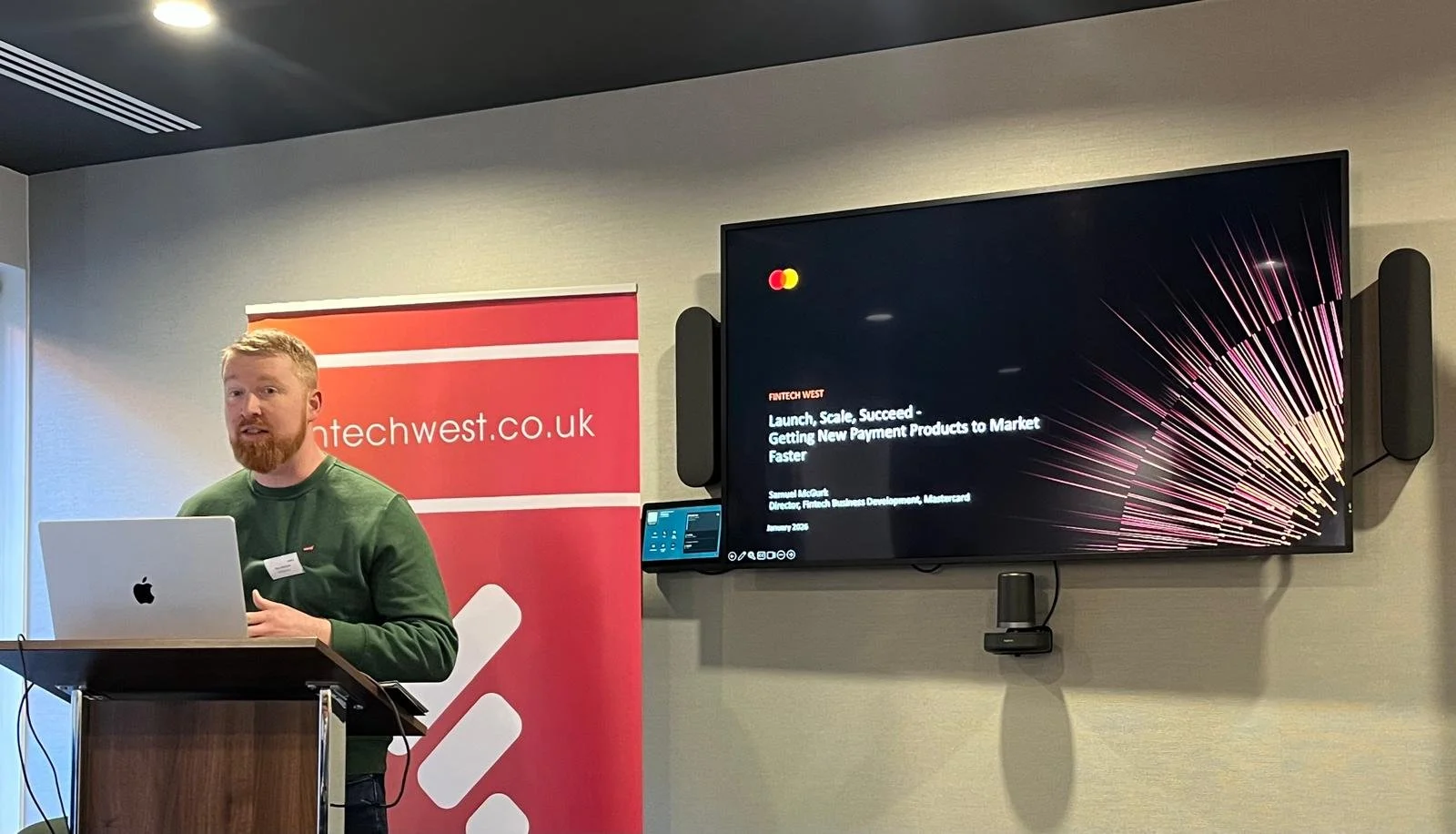
Sam McGurk, Director of FinTech Business Development at Mastercard, demystified how the global giant supports the FinTech community, stating:
“People often think of Mastercard as only interested in talking to scaled up businesses, but nothing could be further from the truth. We are interested to talk to anyone from an early stage, even if it’s an initial idea that needs development.”
The opening part of his session emphasised that Mastercard is interested in businesses at all stages, from initial idea to Series A+, regardless of their funding status.
Mastercard’s support is built on three pillars: Engage, Connect, and Amplify. Sam identified commercial and SME payments as the most underserved opportunities, encouraging founders to treat Mastercard as a "multiplier" rather than just a finishing line. He urged businesses to stay true to their "North Star" and commit to execution over chasing buzzwords.
Over recent years, Mastercard has supported regional FinTech ecosystems across the UK, as well as being a key player in the sector nationally and globally.
Panel: Open Banking, Smart Data, and the Digitisation of Property Payments
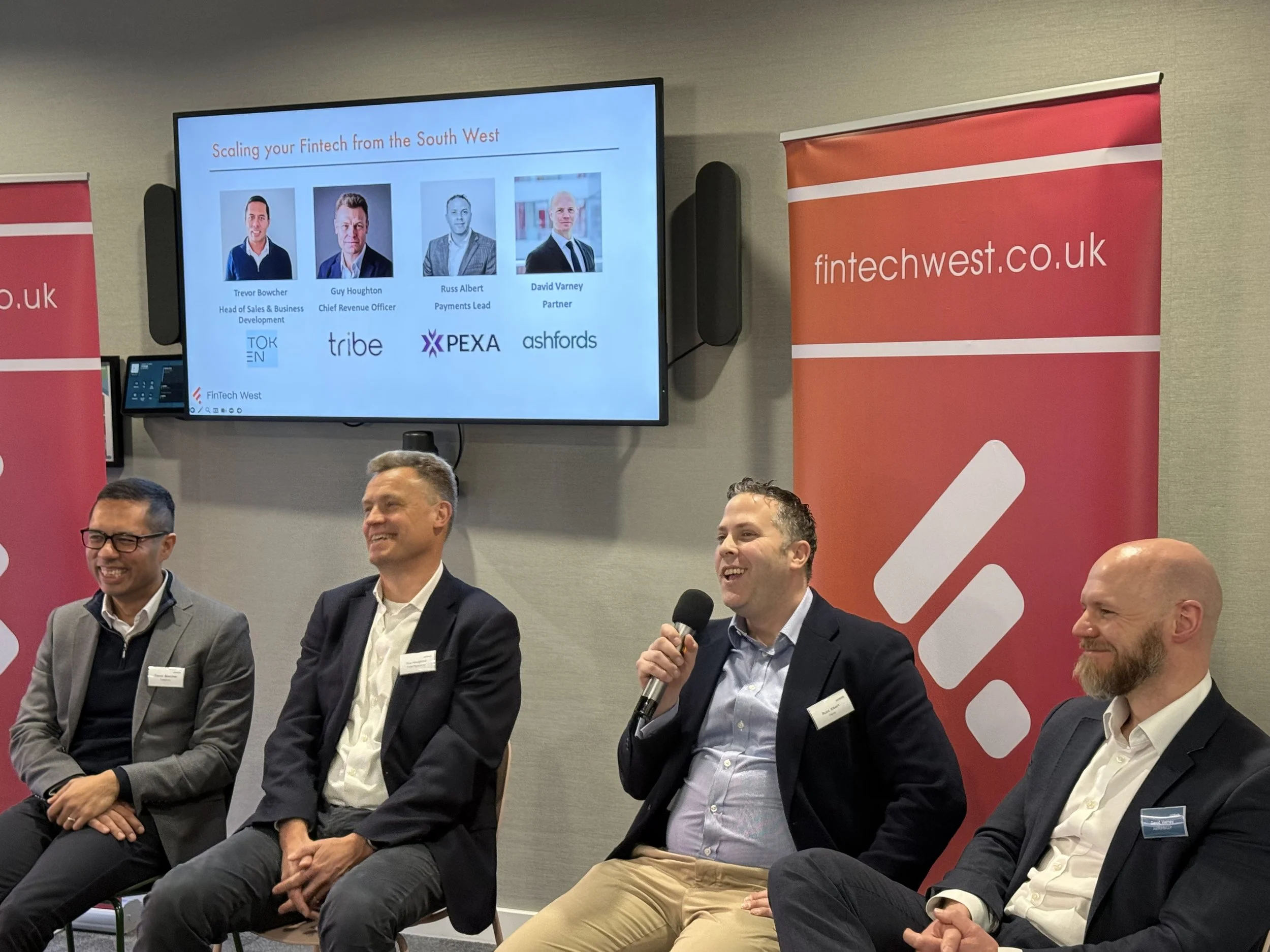
The panel discussion, featuring Trevor Bowcher (Token), Guy Houghton (Tribe), Russ Albert (PEXA) and David Varney (Ashfords) shifted the focus to real-world applications of smart data:
Adoption Milestones: over 16 million people in the UK used Open Banking in the last month alone. Trevor highlighted British Car Auctions as a success story, where £25,000 car payments now cost "pence" compared to traditional card fees.
Infrastructure Synergy: the convergence of card and account-to-account (A2A) payments, with Guy suggesting that Open Banking may now follow the rapid adoption curve seen with contactless technology.
Modernising Property: the digitisation of the property transaction process with Russ speaking about how providing new payment rails for property, PEXA serves as the only UK payment scheme dedicated specifically to the property asset class, and is aiming to remove the friction and delays typically found in high-value completions.
Closing Thoughts
In addition to the expert insights from the speakers, conversations at the event (including the many audience questions during the session) highlighted that the South West ecosystem includes a highly connected community of founders and operators choosing to build their global success stories from locations like Bristol, following in the footsteps of Creditcall, Moneyhub and others.
Key developments like the Q1 2026 launch of commercial CVRPs and the digitisation of high-value property transactions are set to remove long-standing friction from the UK payments infrastructure and processes. With AI quietly becoming the "plumbing" for essential functions like fraud detection and smarter onboarding, and new frameworks like the Data Use and Access Act 2025 providing a necessary roadmap for trusted data sharing, the focus has shifted toward building resilient, regulation-ready infrastructure from the outset.
Ultimately, whether navigating the complex new safeguarding regime or scaling a South West fintech toward a global exit, the event highlighted that the region is well positioned to play a key role in the future evolution of the UK’s payments industry.
Stay tuned for details of future FinTech West activities by following our LinkedIn page.