
The FinTech West Annual Conference 2026, was our biggest yet, with around 300 people joining us at We the Curious on Friday 6 November. Across the day, one question kept coming back: how does the South West turn its FinTech strength into national advantage? A big thank you to our Conference sponsors and partners S&W, PEXA UK, Howden and Birketts, plus also to Finbridge for powering the pitch showcase.
The day also marked the launch of The Growth Catalyst, our report on the West of England's financial services and FinTech ecosystem. Its headline numbers set the scene: 61,000 people work across financial services and FinTech in the region, 100+ FinTech businesses operate here, and FinTech adds an estimated £400m+ in GVA.
Welcome and launching The Growth Catalyst report
Stuart Harrison, Founder & CEO of FinTech West, opened the day by looking back on eight years since he founded FinTech West. At our very first event, at Hargreaves Lansdown, a speaker opened with "hello Bristol fintech", words he never expected to hear together. A full room in person, he said, is the clearest sign of how far the sector has come.
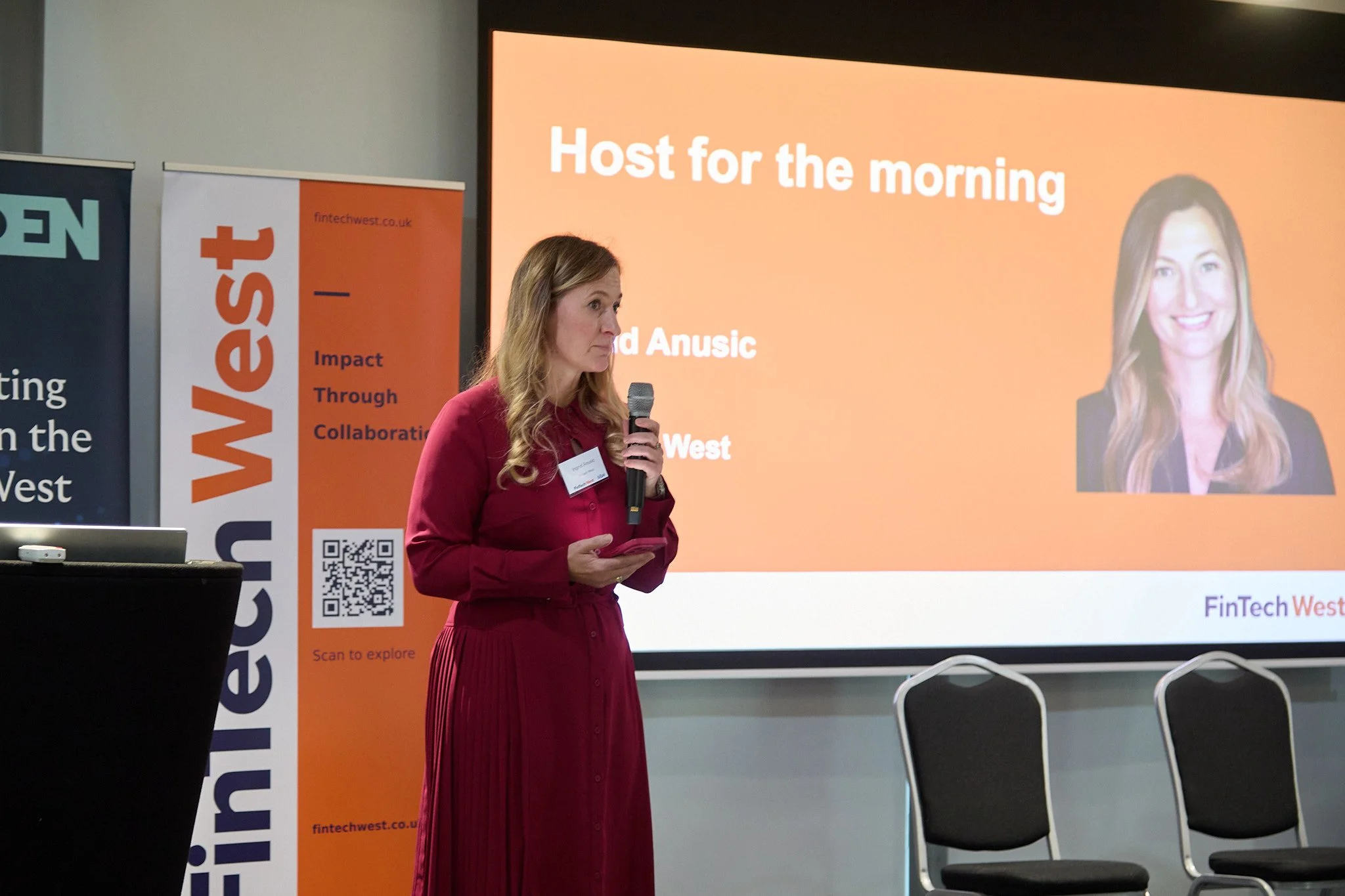
Ingrid Anusic, CMO & Strategic Adviser, then launched The Growth Catalyst. The report looks at the strengths, economic contribution and growth opportunities of the ecosystem. It goes beyond fintech to show how financial services expertise, technology and investment can support other industries and regional priorities. The West of England outperforms most UK regional fintech hubs outside London and the North West. The Bristol city region also attracts around £700m a year of venture capital into science and deep tech, about 60% more than Manchester. The challenge, Ingrid noted, is that the region's strength sits where sectors and technologies meet, which makes it harder to sum up nationally. The report will be updated every year to track progress and showcase the innovation happening here.
Opening Keynote
Our opening keynote came from Marty Reid, Director of Innovation at the University of Bristol, who highlighted how the university’s deep tech expertise is supporting FinTech innovation. He showcased Isambard-AI, the UK’s most powerful AI supercomputer, including research demonstrating how bespoke AI models can outperform general-purpose alternatives in financial forecasting.
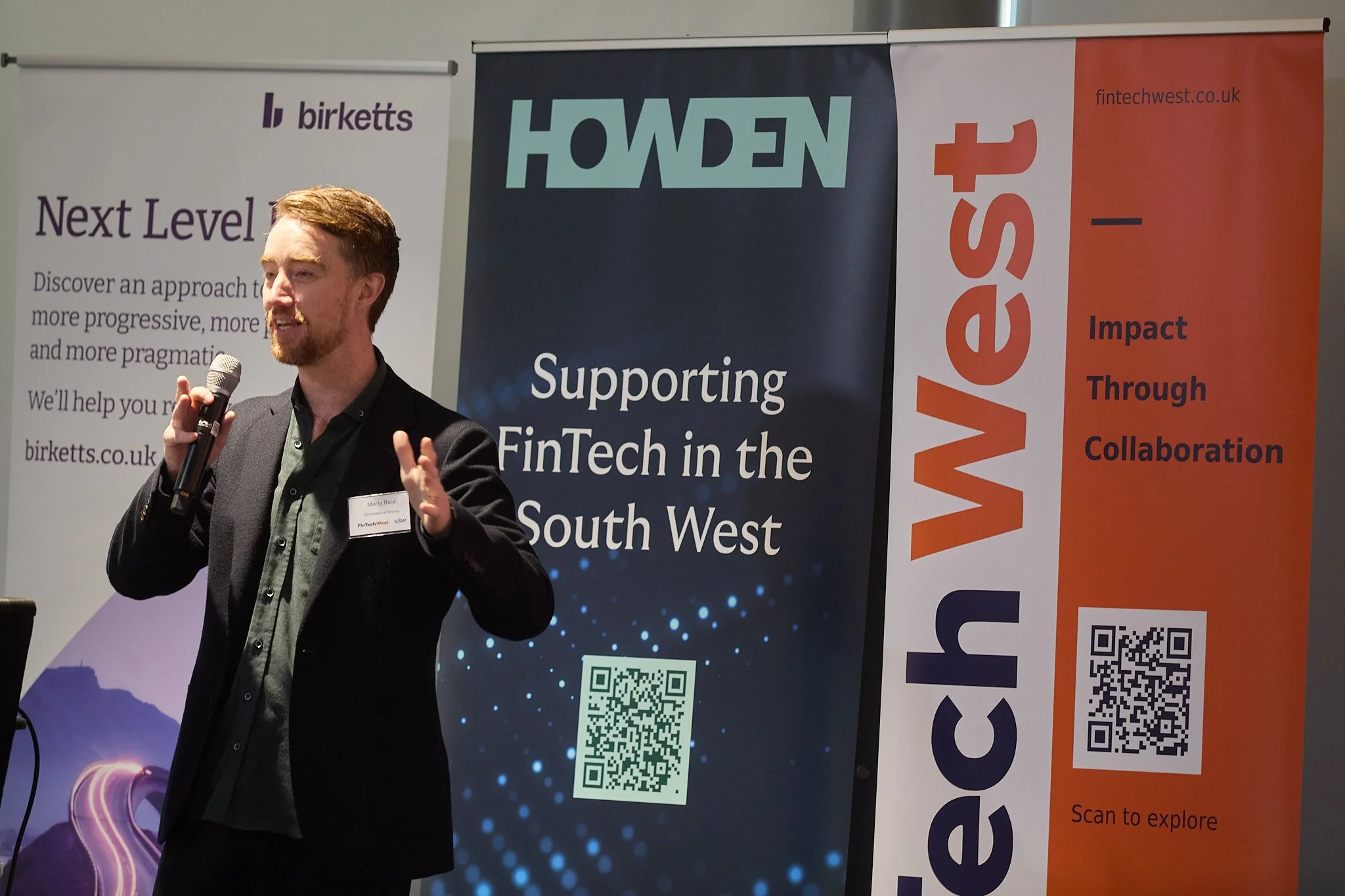
Marty also highlighted Bristol’s strengths in cyber security and quantum technology, including the £35m Quantum Technologies Innovation Centre. Finally, he introduced the Future Finance Innovation Lab, which builds on the £2m Future Finance Accelerator to connect FinTech businesses with deep tech expertise, helping firms adopt new technologies while reducing costs and risks.
Panel 1: From AI ambition to accountable adoption
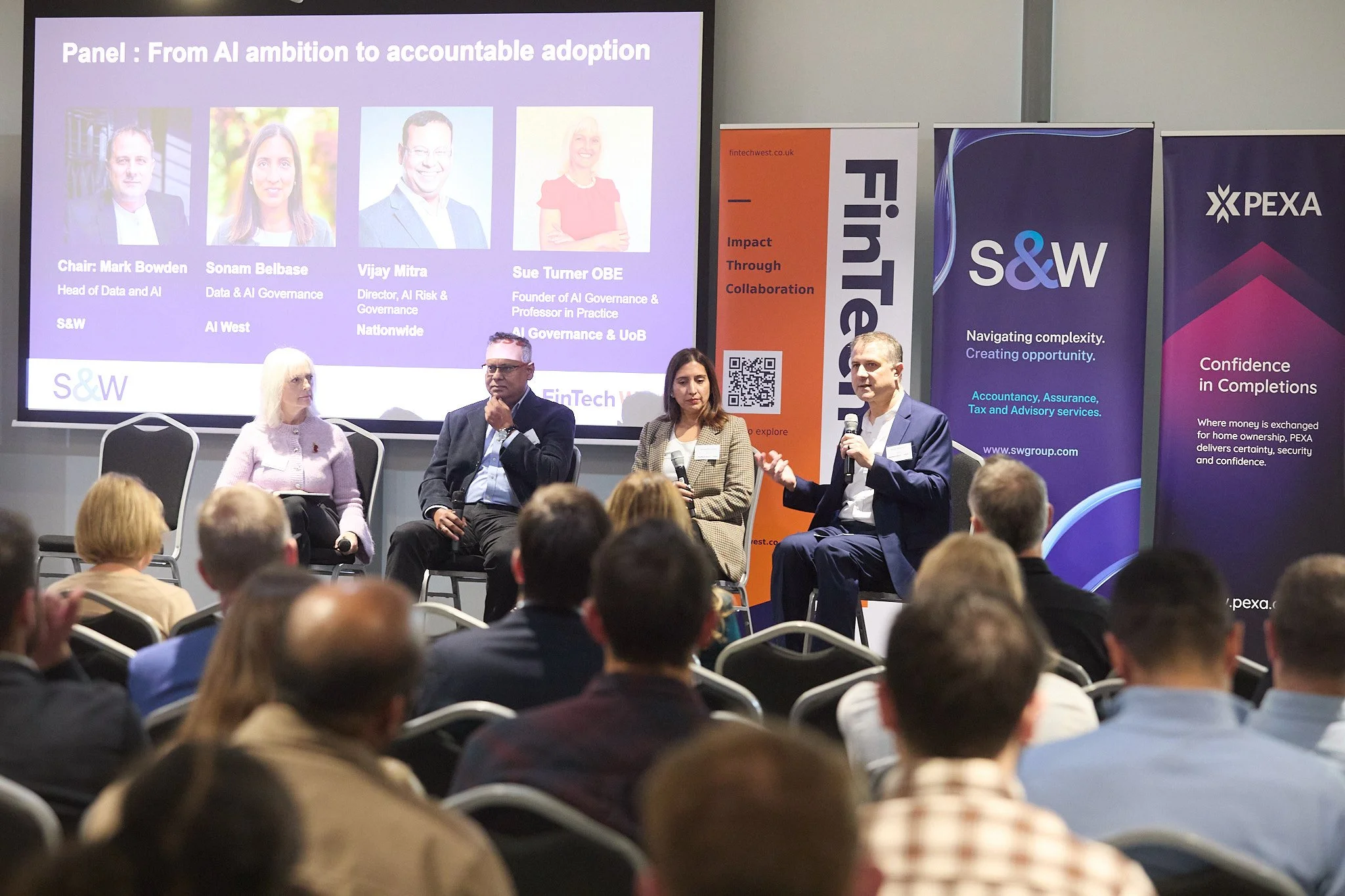
Sponsored by S&W, our first panel was chaired by Mark Bowden, Head of Data and AI at S&W. He was joined by Sonam Belbase, Data & AI Governance Adviser at AI West; Vijay Mitra, Director AI Risk & Governance at Nationwide; and Sue Turner OBE, Founder of AI Governance and Professor in Practice at the University of Bristol. This session focused on turning AI ambition into responsible action. Governance, the panel argued, should enable progress rather than become a tick-box exercise. Organisations need clear ownership, sensible risk assessments, ongoing monitoring and real accountability for AI decisions. With agentic AI advancing, the ability to challenge and reverse decisions matters more than ever. Smaller firms can move quickly by starting with manageable use cases and clean data.
Panel 2: From Open Banking to Open Property
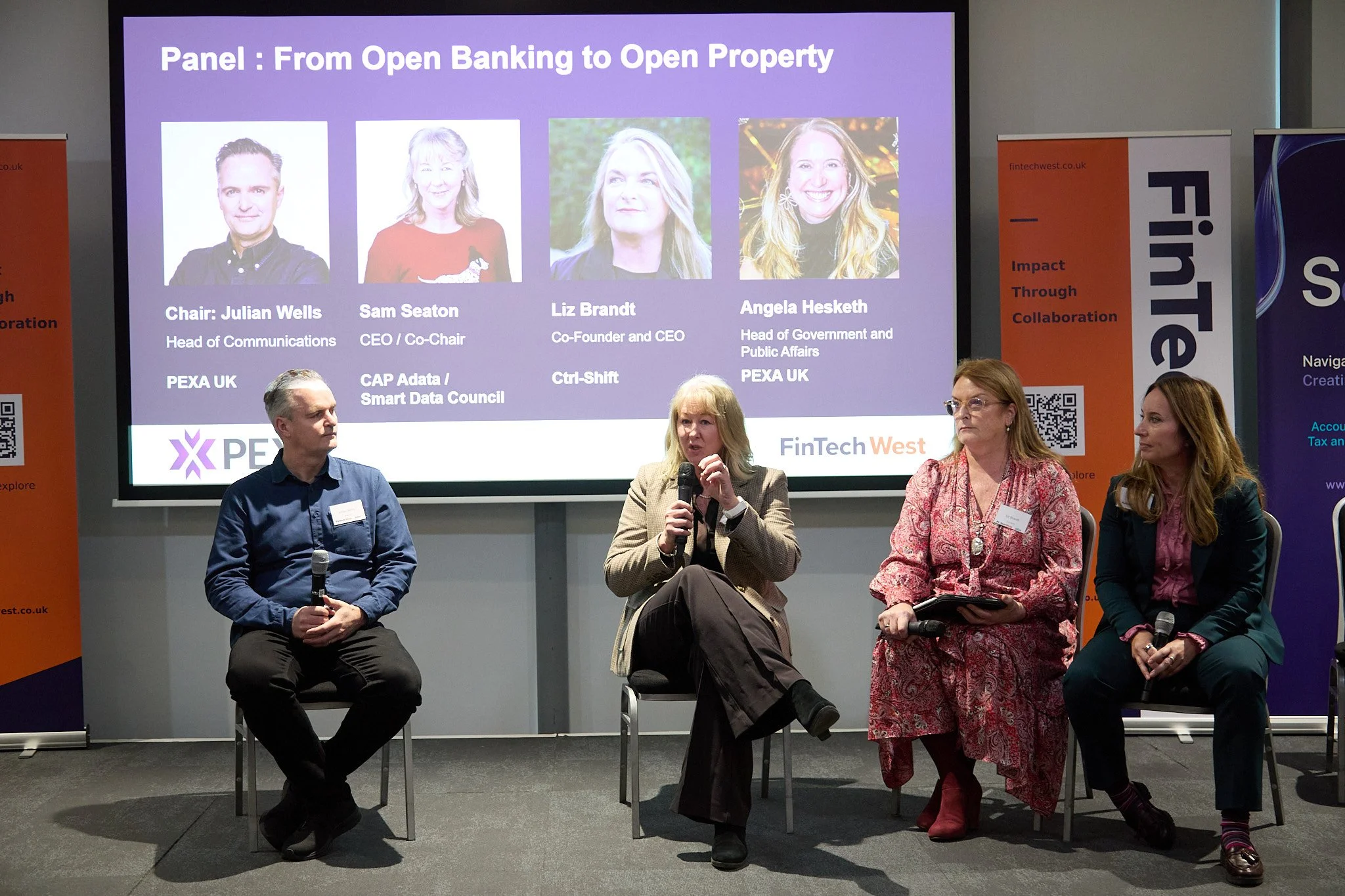
Sponsored by PEXA UK, this panel was chaired by Julian Wells, Head of Communications at PEXA UK. He was joined by Samantha Seaton, CEO of CAPAdata and Co-Chair of the Smart Data Council; Liz Brandt, Co-Founder and CEO of Ctrl-Shift; and Angela Hesketh, Head of Government and Public Affairs at PEXA UK. With between a quarter and a third of property transactions failing, the discussion explored “open property”: verifying information once and sharing it securely with those who need it. The lessons from open banking were clear: agree commercial incentives and liability early, rather than getting lost in the detail. Panellists called for a practical roadmap, reusable identity checks and support for FinTechs already making property transactions quicker and simpler.
Fintech's next frontier: can the South West turn potential into advantage?
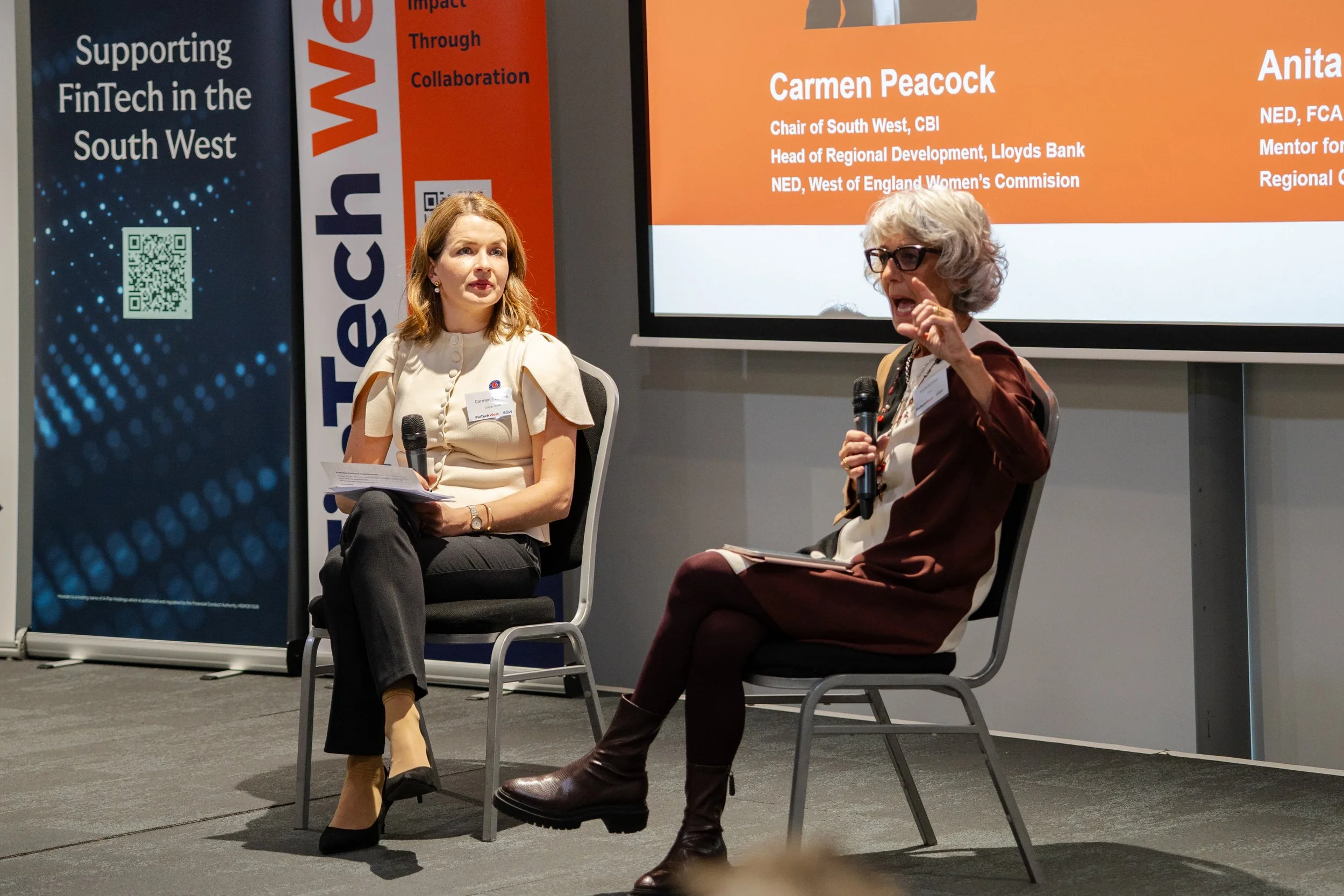
Anita Kimber NED for the FCA and Carmen Peacock of CBI South West agreed that the region has significant FinTech strengths but too often undersells them. FinTech can improve productivity, innovation and access to finance across the wider economy, not just within financial services. The capital, expertise and advisers are here; the challenge is helping more businesses know what is available. Their message was to build on the South West’s own strengths rather than copy London, and to make the region’s case together.
Panel 3: Beyond the Algorithm: Can technology help finance make better decisions?
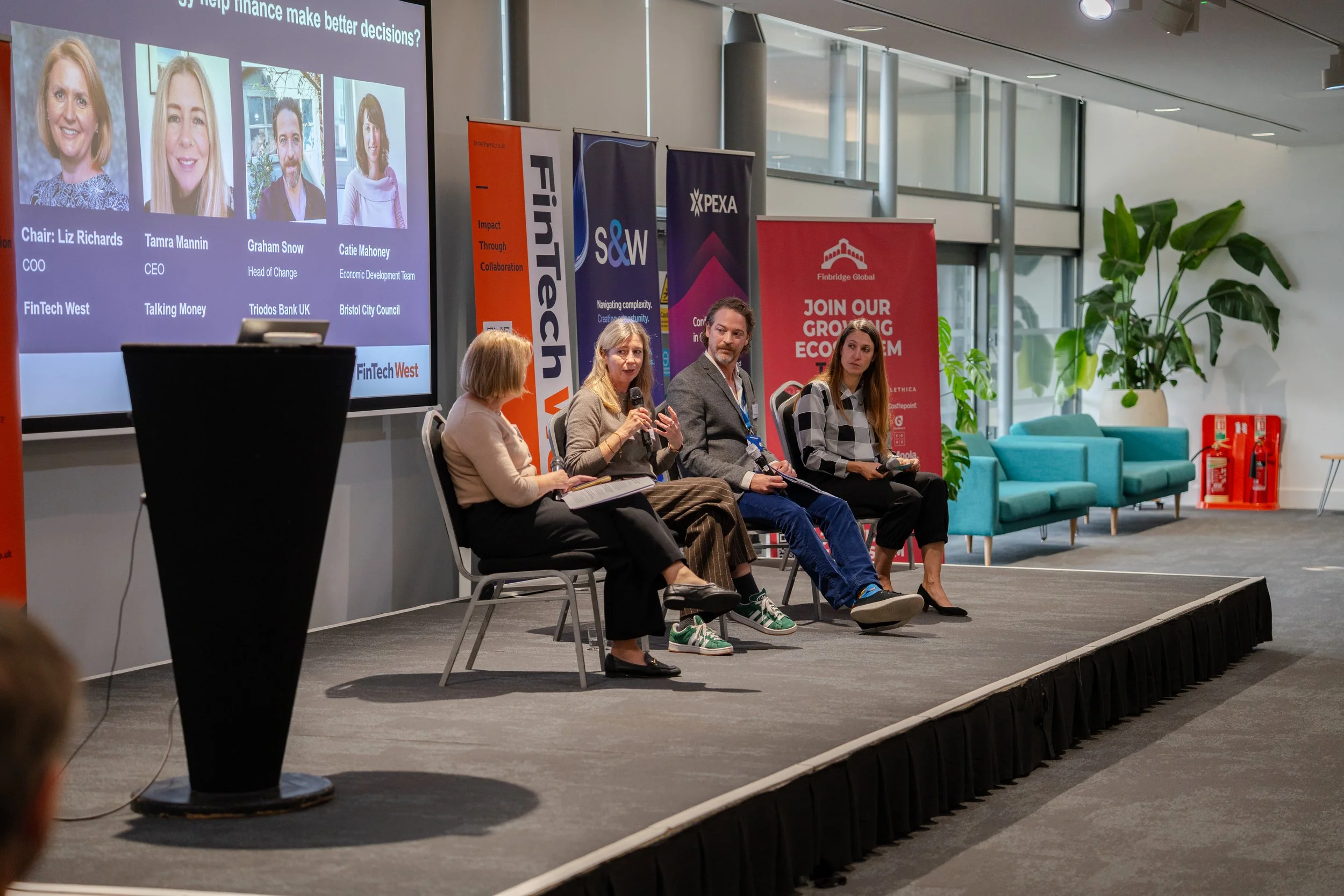
The panel was chaired by our own Liz Richards, COO of FinTech West and AI West. She was joined by Tamra Mannin, CEO of Talking Money; Graham Snow, Head of Change at Triodos Bank UK; and Catie Mahoney from Bristol City Council's Economic Development Team. This session asked how technology can better serve the people behind the data. Faster processes are not automatically better, particularly if they exclude people or overlook their circumstances. Talking Money shared how giving clients one adviser reduced repeat requests for help from 73% to 27%. The panel called for services designed around real-life outcomes, wider access to FinTech careers and closer collaboration to tackle inequality.
Panel 4: Cyber resilience in the boardroom: preparing for impact
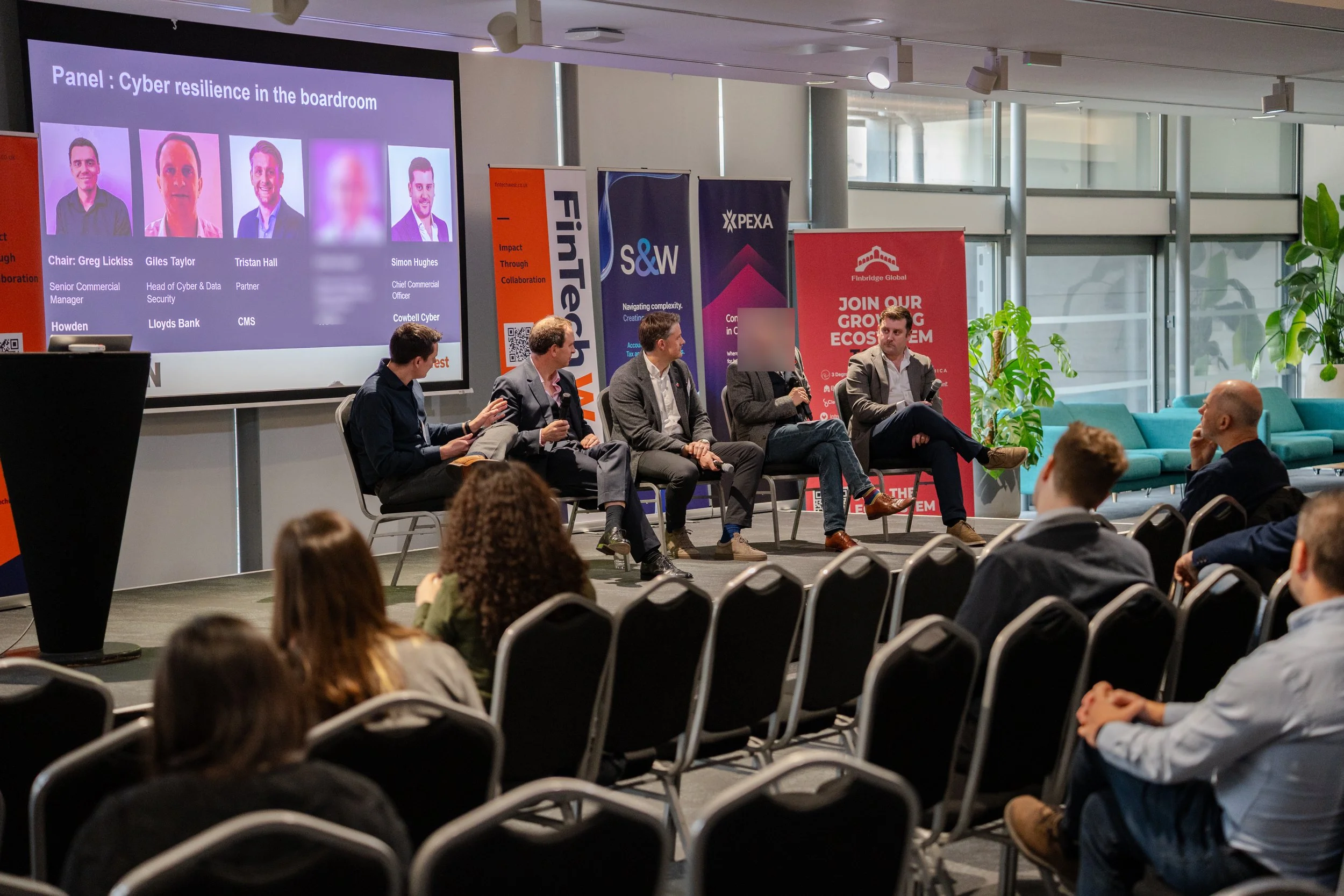
Sponsored by Howden, this panel was chaired by Greg Lickiss, Senior Commercial Manager at Howden. He was joined by a senior representative from the National Cyber Security Centre; Giles Taylor, Head of Cyber and Data Security at Lloyds Commercial Banking; Tristan Hall, Partner at CMS; and Simon Hughes, Chief Commercial Officer at Cowbell Cyber. With AI making cyber-attacks easier to launch, the message was that no business is too small to be a target. Basic measures such as patching, multi-factor authentication, staff training and Cyber Essentials remain vital. Boards also need a practical plan for the first 48 hours of an incident: who to call, how to keep operating and how to manage recovery.
Afternoon keynote: The South West in UK FinTech
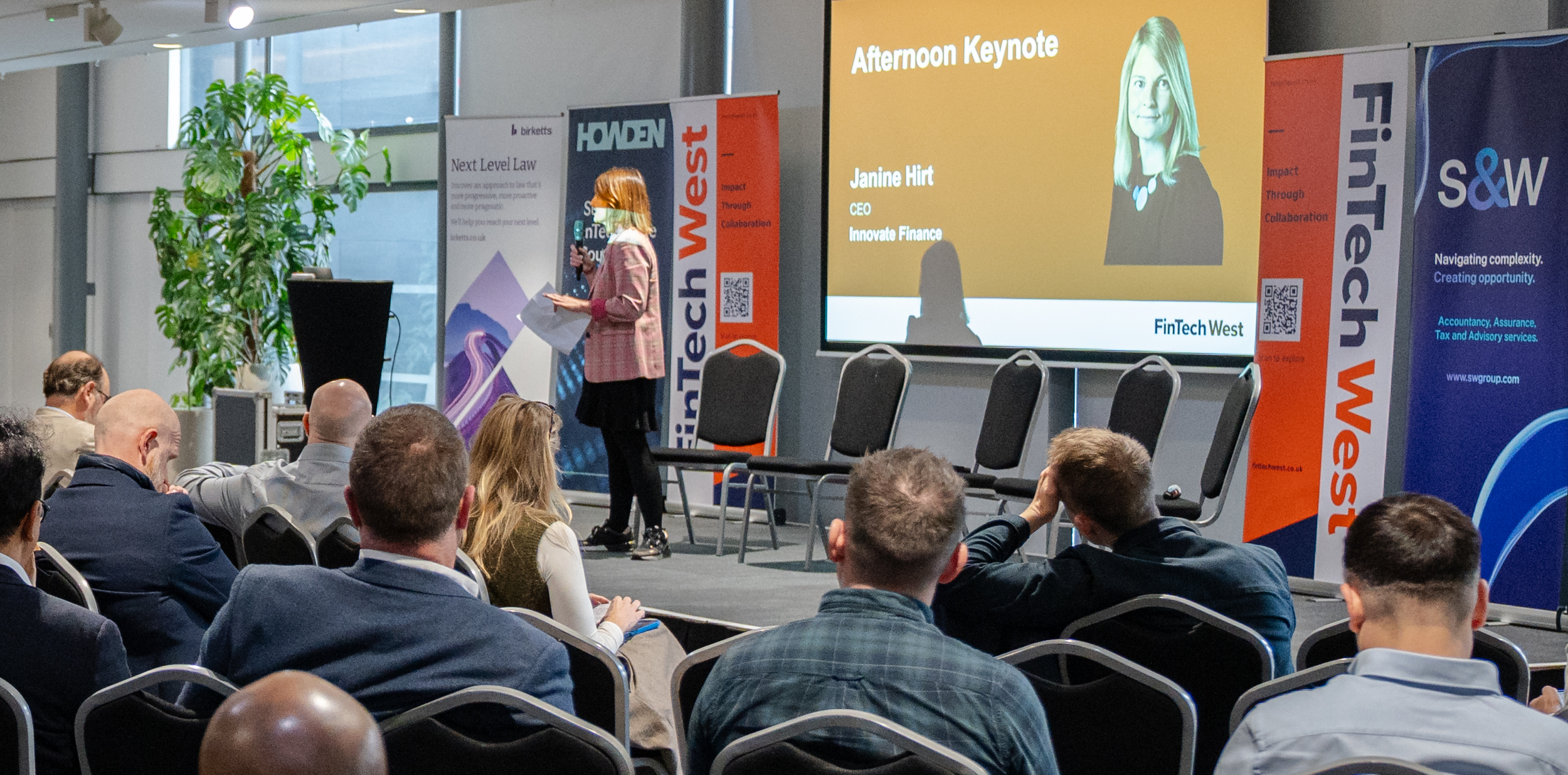
Janine Hirt, CEO of Innovate Finance, described FinTech as a major engine of UK growth and highlighted the South West’s national importance. She cited more than 190 FinTech firms, 19,000 jobs and over £1bn in annual GVA across the wider region. Her priorities included progress on open finance, stronger action on fraud, a clear stablecoin strategy and more UK investment into UK FinTech. She asked firms to share the barriers holding them back with Innovate Finance and FinTech West, and to tell their success stories more loudly.
Address: Councillor Tony Dyer, Leader of Bristol City Council
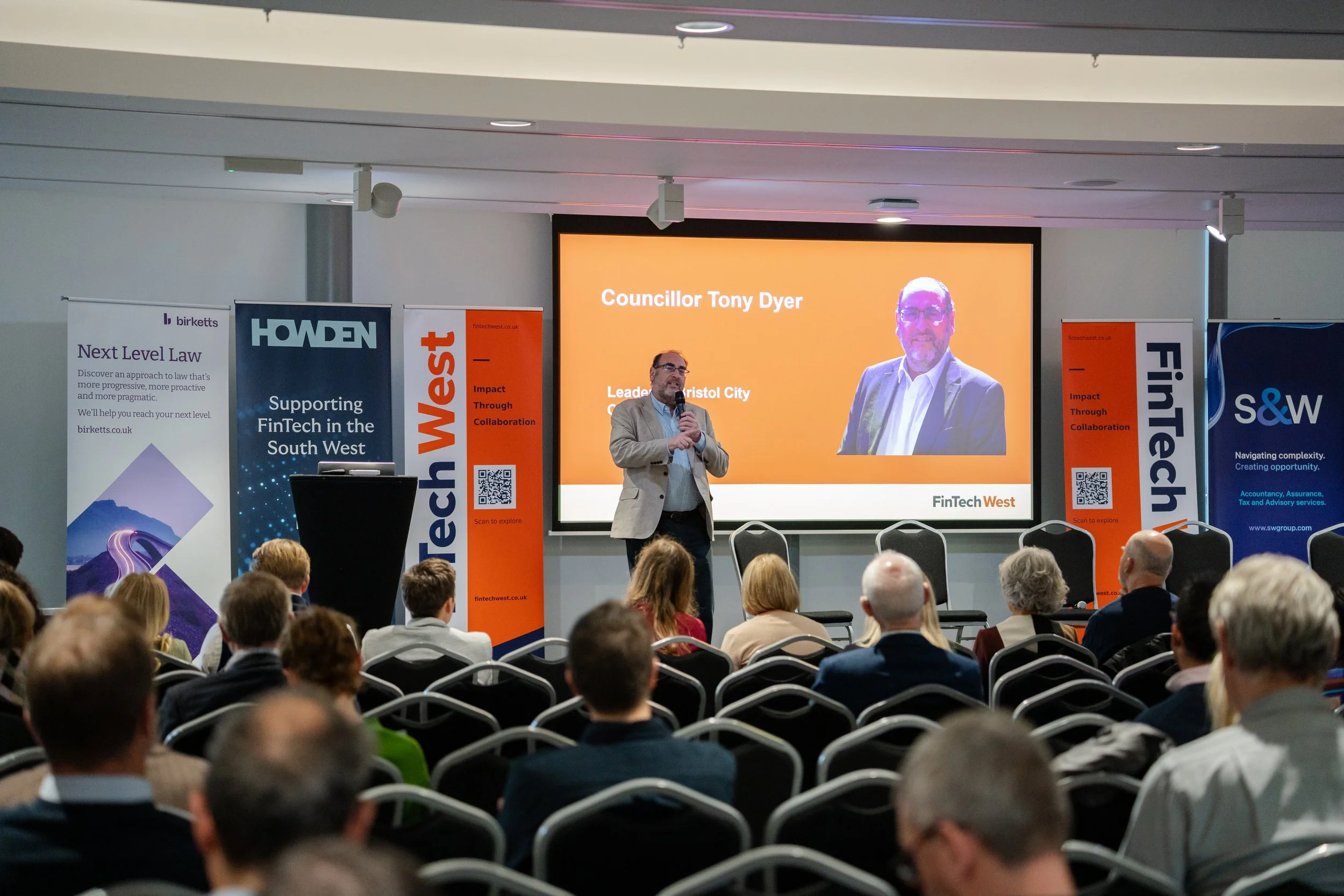
Councillor Tony Dyer described Bristol as an international innovation success story that still does not shout loudly enough about its achievements. He argued that greater devolution could unlock further economic growth and that FinTech has an important part to play across sectors. The council’s focus, he said, is on long-term stability, collaboration and inclusive growth, particularly opening up opportunities for talent in communities that have been left behind. His message: Bristol has plenty more potential to realise.
Panel 5: Built to scale: funding, governance and growth beyond London
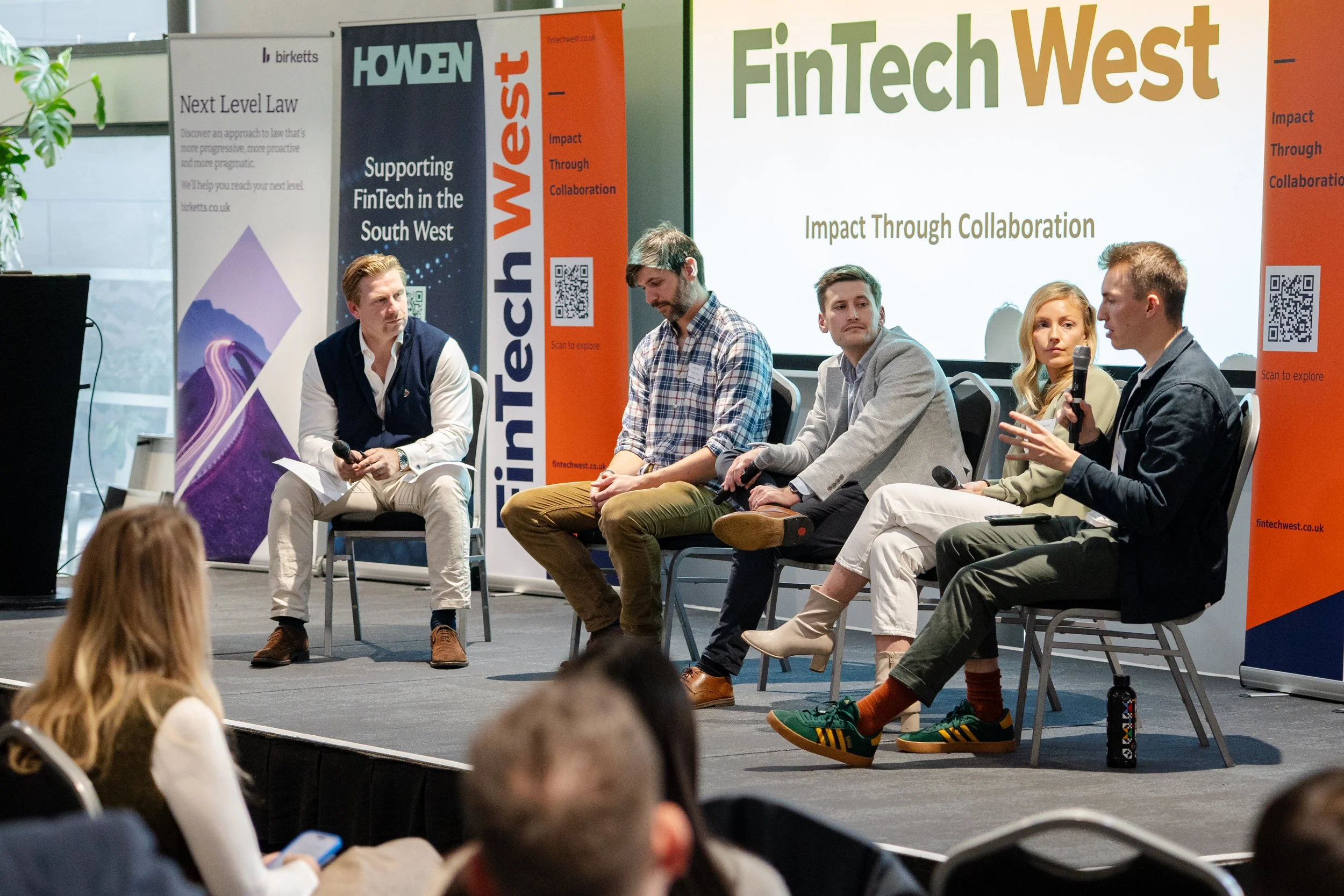
Chaired by Ed Tellwright, Director, South West at the British Business Bank, this panel brought together Will Orde, Partner at Passion Capital; Charlie Mercer, Deputy Executive Director at Startup Coalition; Sophia Jarvis CFA, Co-founder and CEO of Mia Wealth; and Adam Turner, Legal Director at Birketts. The panel challenged the idea that ambitious founders must be based in London. The South West has talent, universities, investment and an attractive base for building globally focused businesses. Panellists discussed the impact of changes to founder incentives and the growing importance of trust and brand in an AI-led market. Their advice: stay focused on your business, get legal advice early and do not let fundraising become the business itself.
FinTech pitch showcase, powered by Finbridge
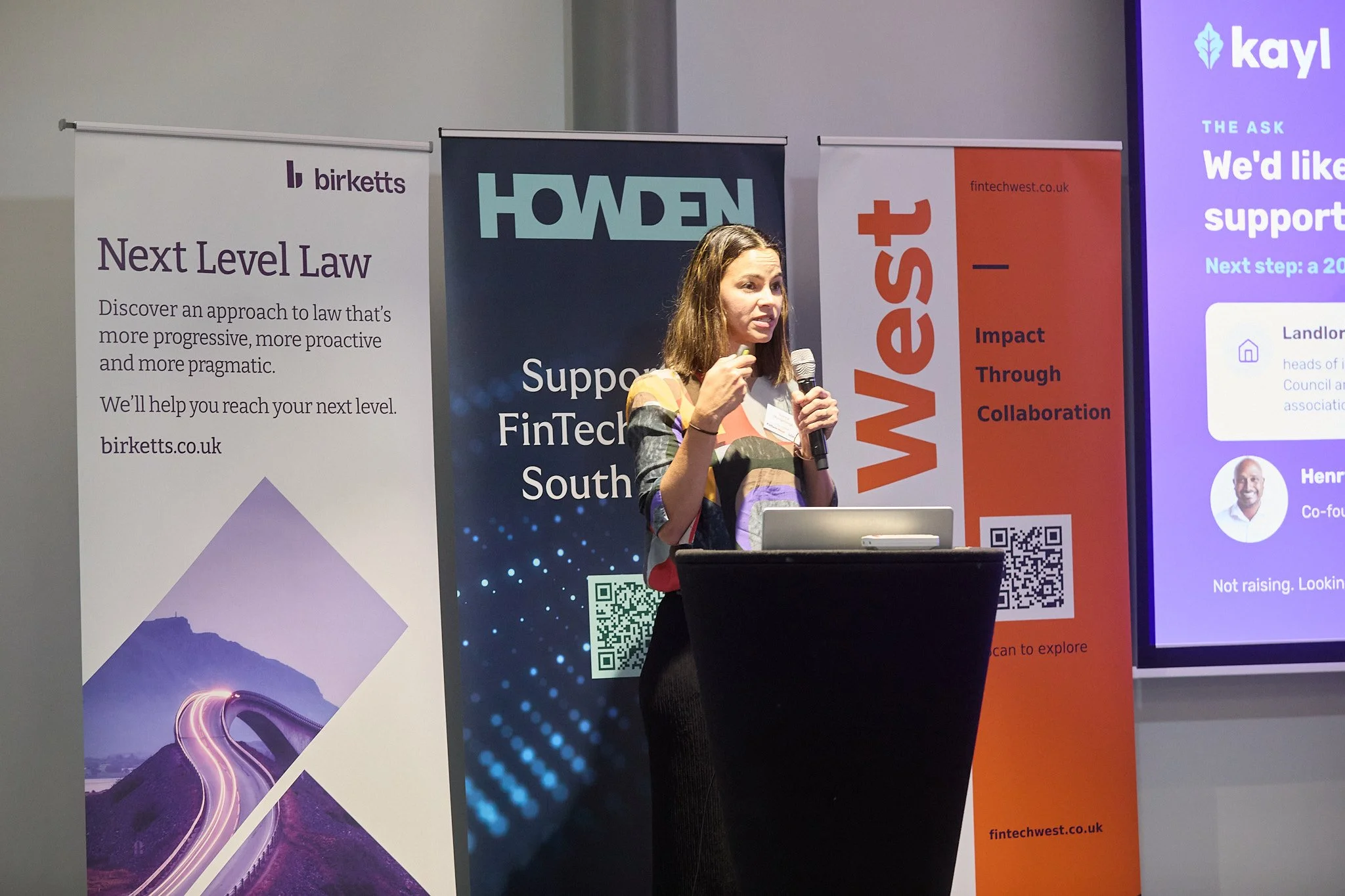
Eight regional founders each had three minutes to explain what they are building and make a specific ask of the room:
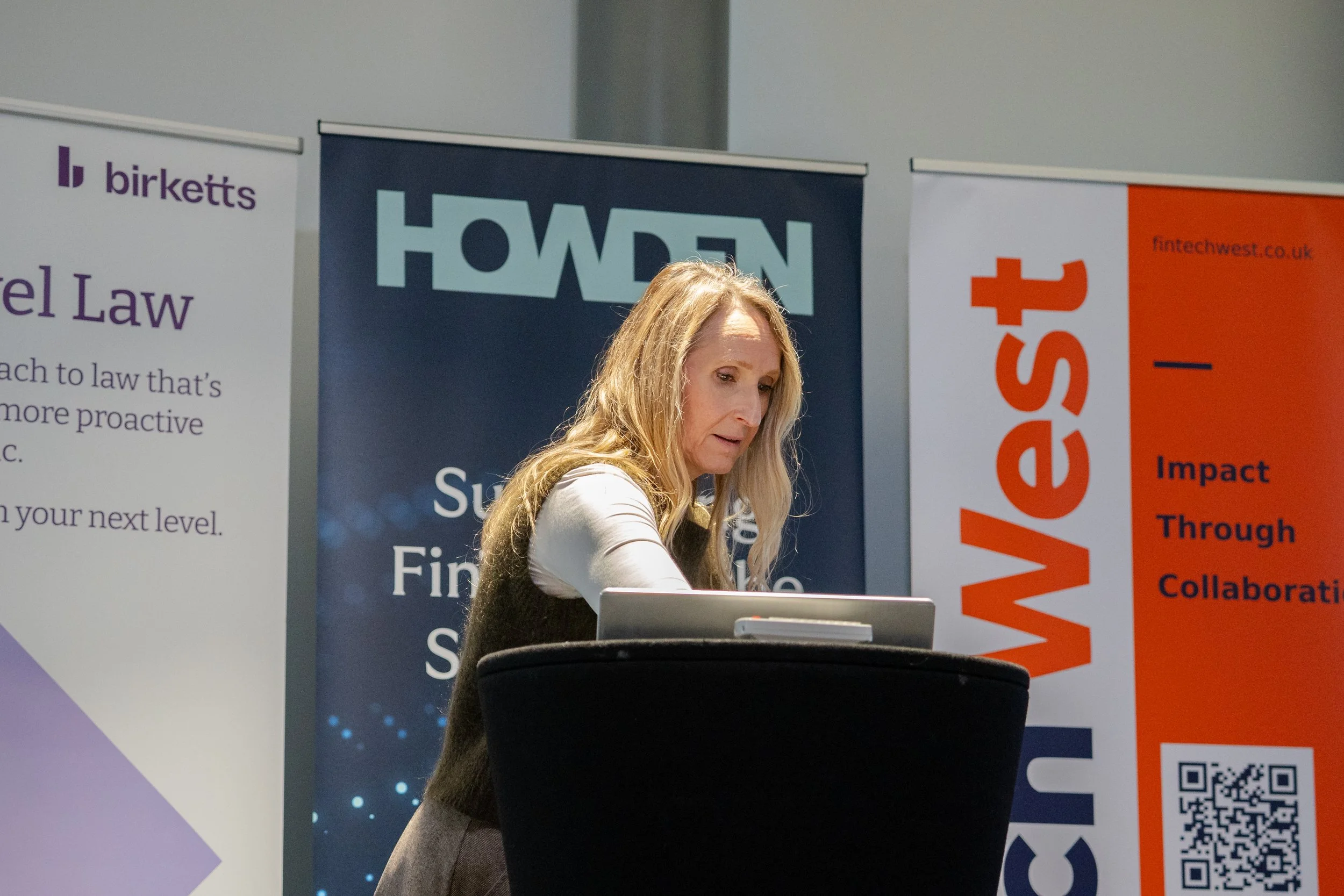
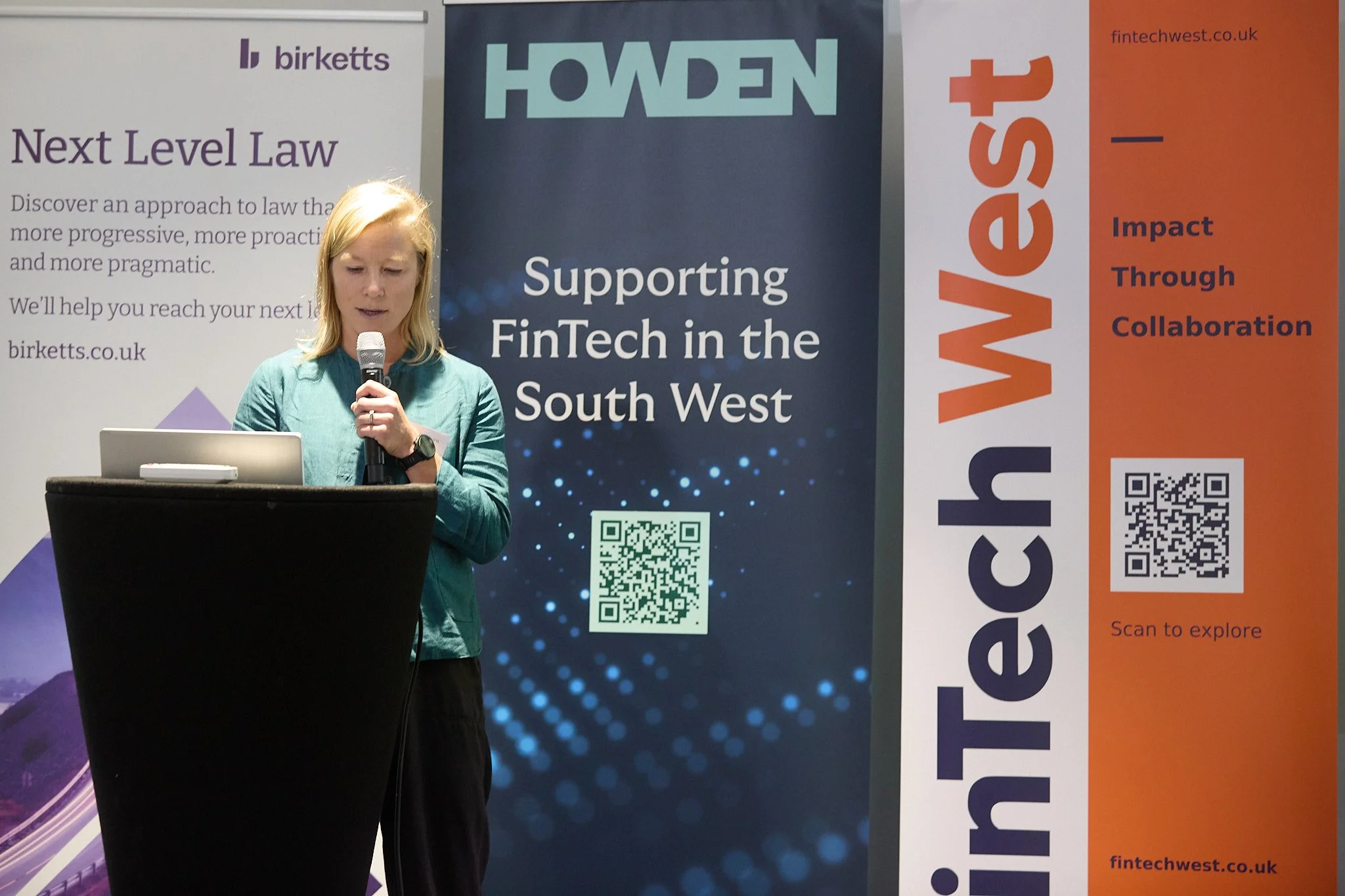
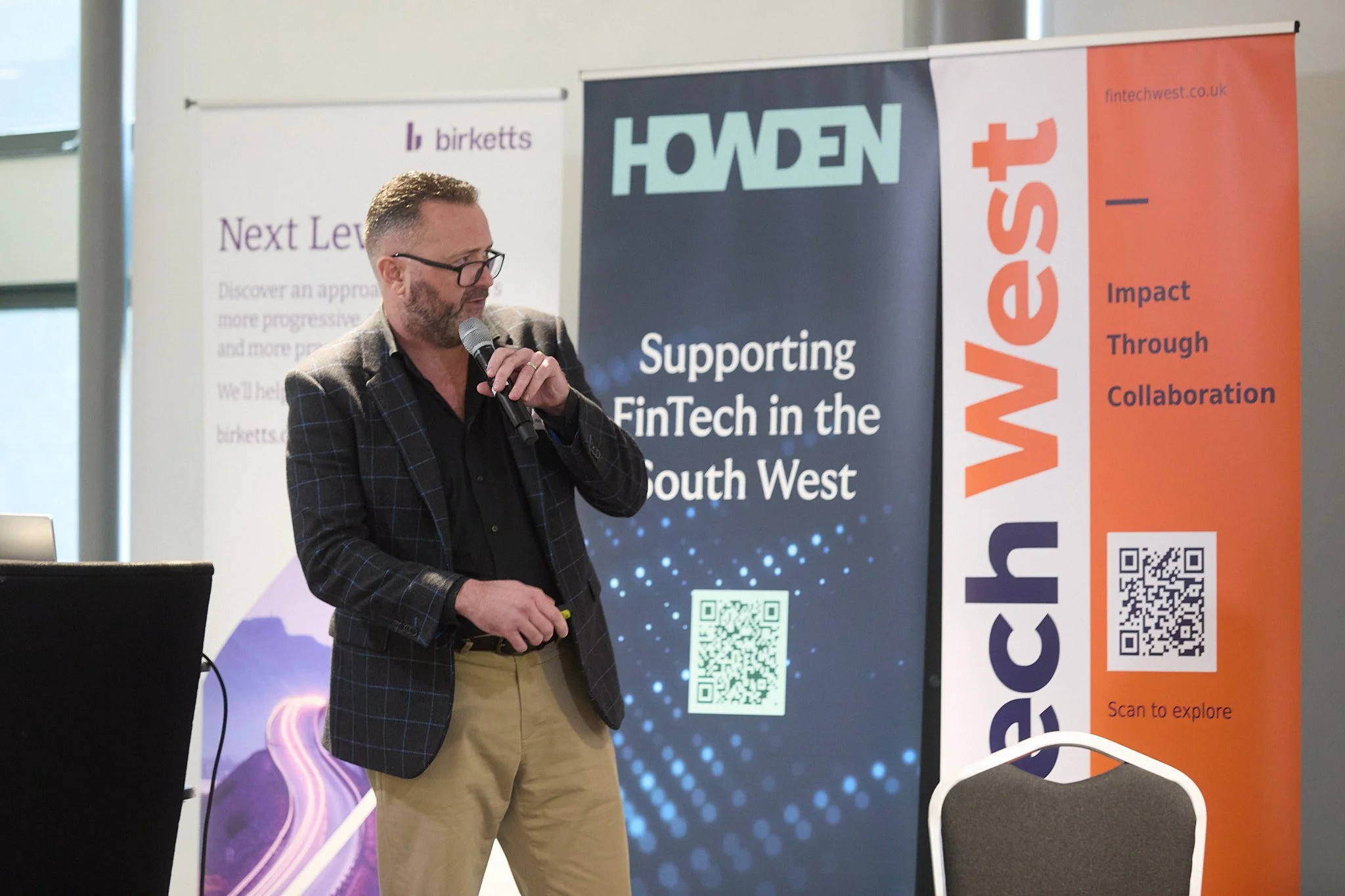
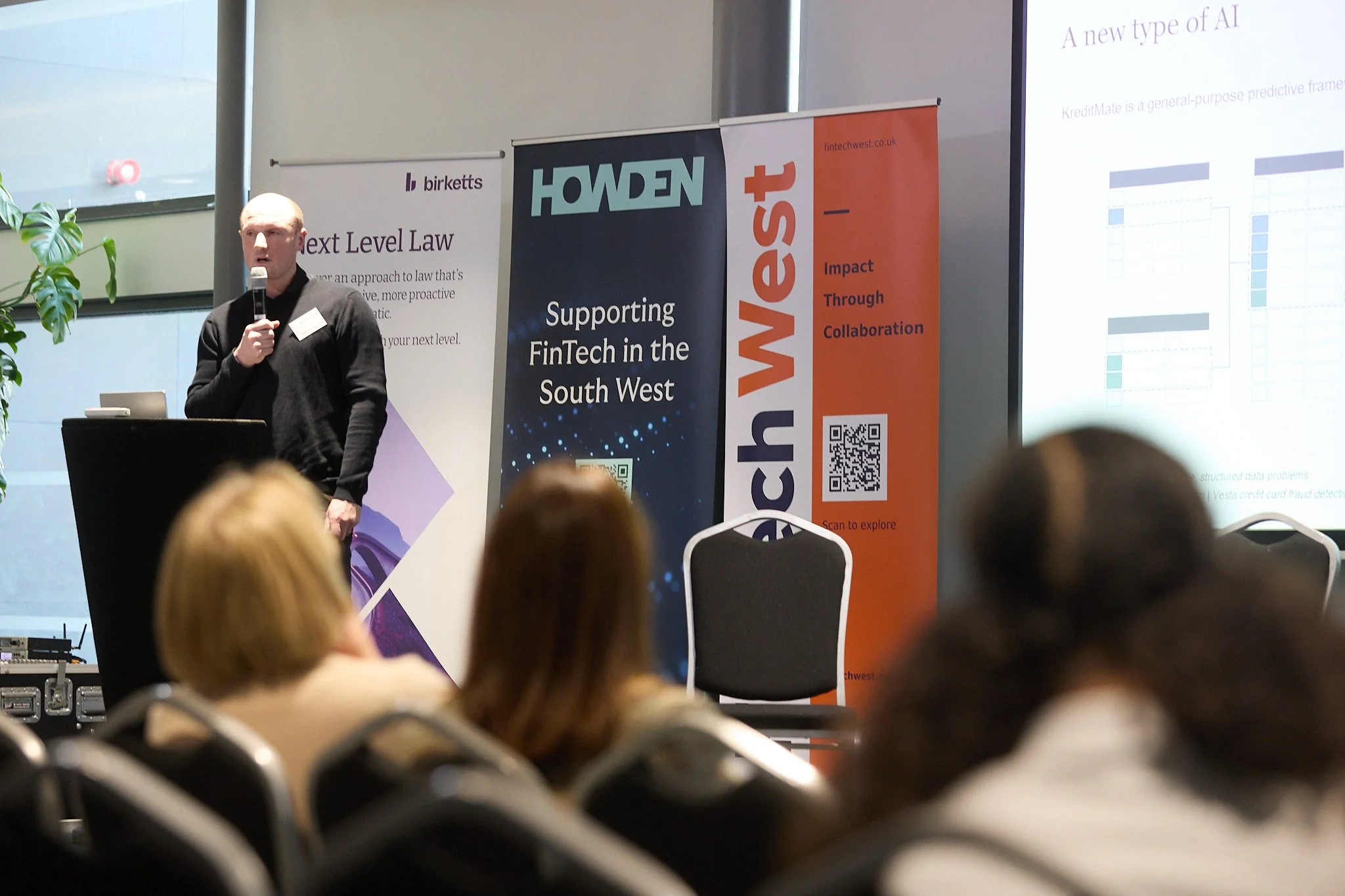
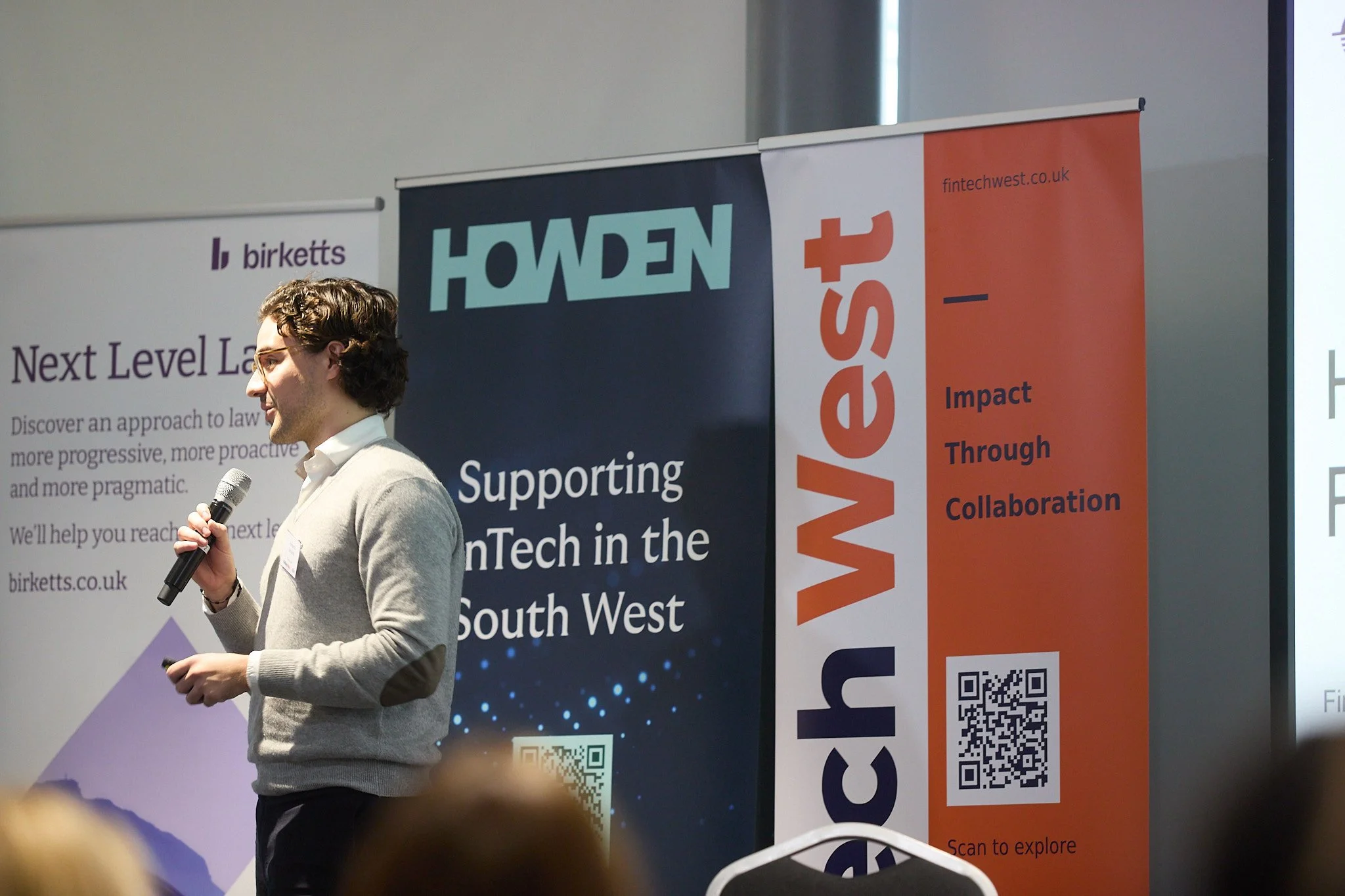
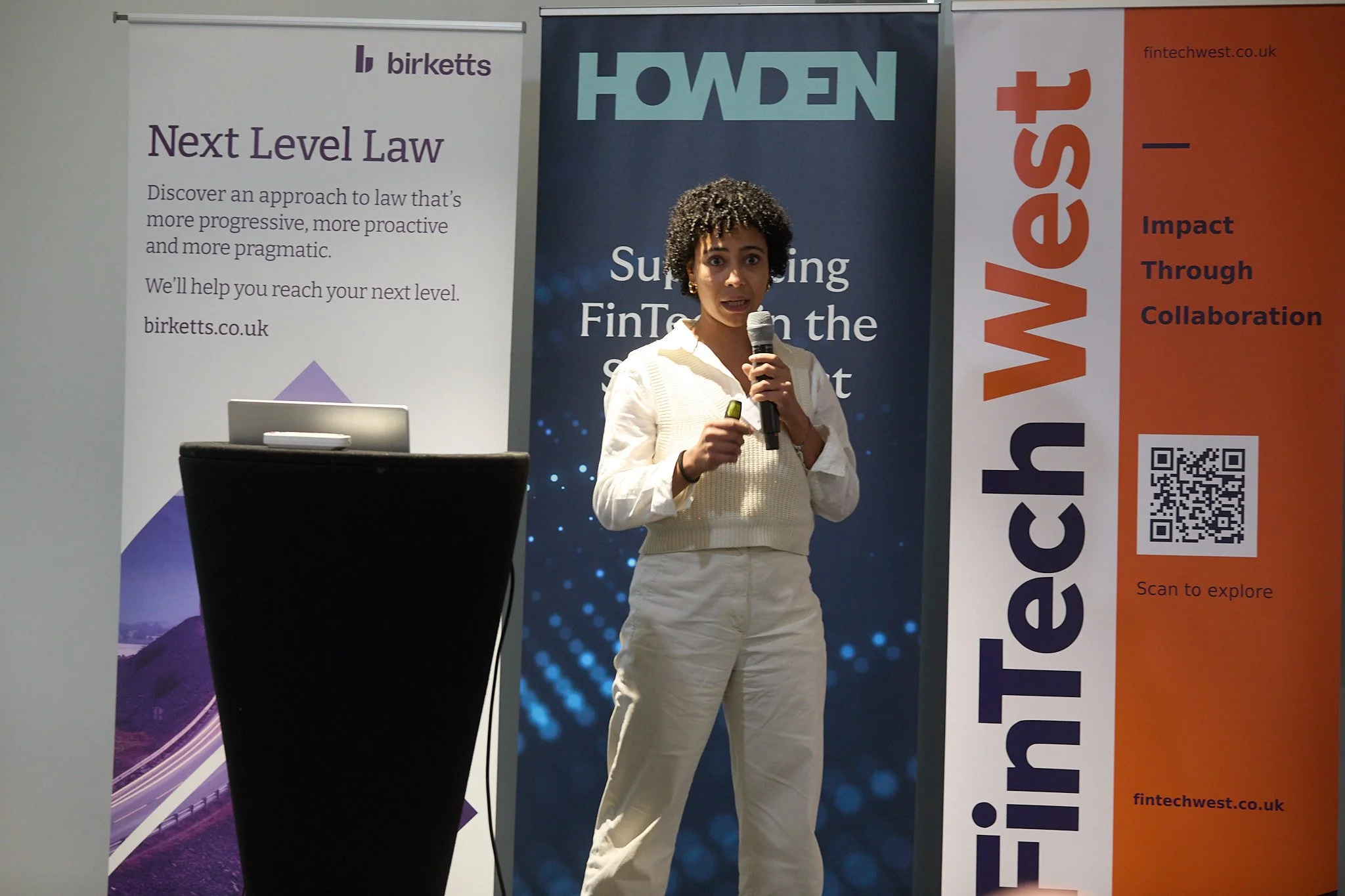
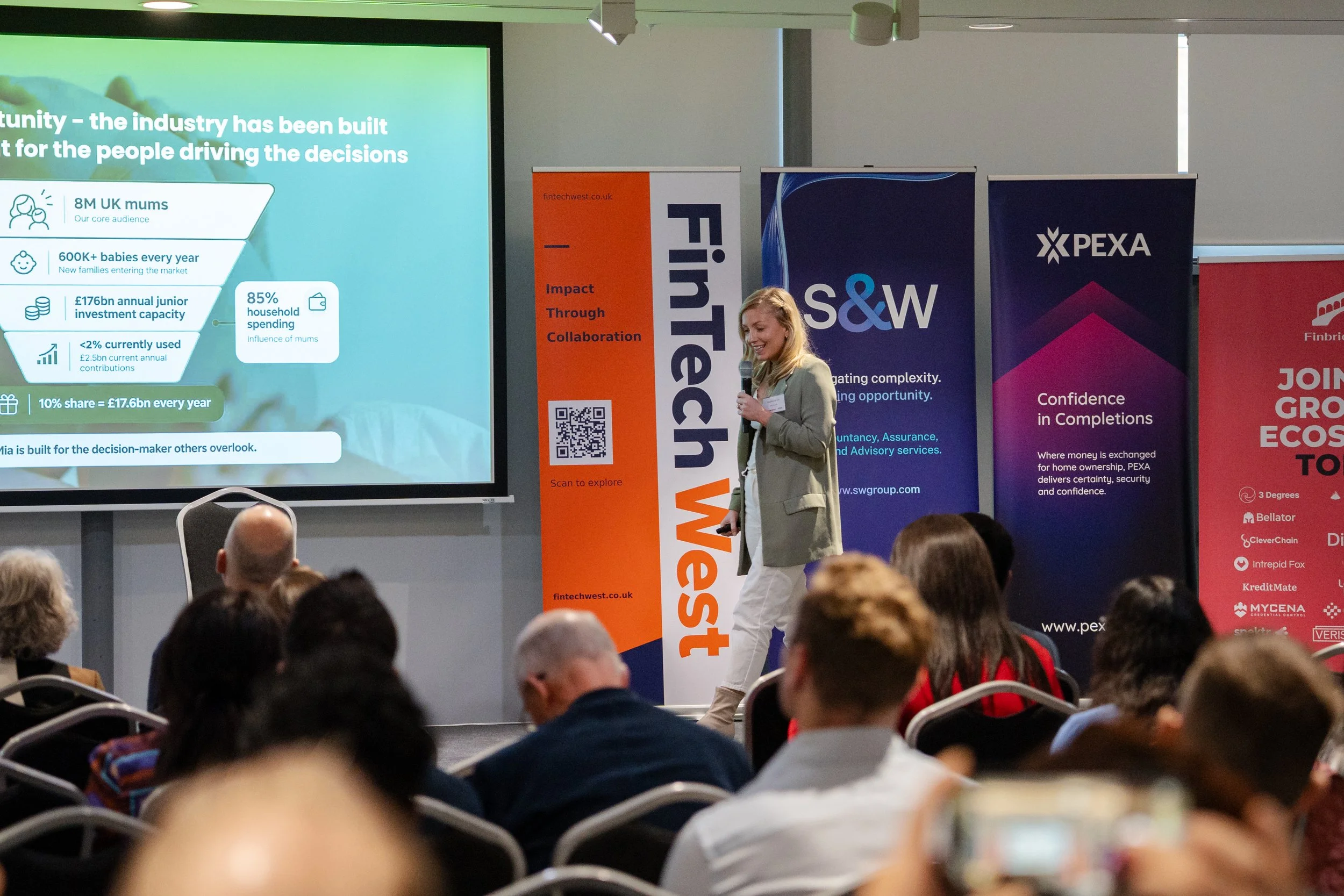
LAYBL – (Jen): uses a phone camera to identify and value home contents, tackling the 70% of people who only find out they're underinsured after a claim. Ask: introductions to private client insurers and wealth managers.
Kayl – (Bianca): builds a verified Standard Financial Statement through open banking in minutes rather than three hours. Ask: a free 90-day pilot with councils, housing associations and debt advice charities.
Good With – (Emily): turns a yes/no credit decision into "yes now" or "yes later", validated with seven lenders including Lloyds Bank. Ask: lenders and impact investors.
Aprentiz – (Phil) a regulated AI proving ground built on Isambard compute, offering free compute for R&D in regulated AI. Ask: firms with use cases to test.
KreditMate – (Rhys) an explainable AI framework for structured financial data, launching with non-prime consumer lending. Ask: £600k to build the lender and team.
Alana Labs – (Fernando) a payroll savings platform with employer top-ups, launching with 3,000 UK pubs. Ask: SME employers to pilot it.
Alethica – (Aurelia) AI agents that handle retail finance complaints with conduct rules built in, achieving a 75% resolution rate in a live pilot. Ask: consumer credit firms for further pilots.
Mia Wealth – (Sophia) an investing app for children's Junior ISAs and junior pensions, with 1,000 users and £500k invested in its first six weeks. Ask: £1m to accelerate growth.
Closing keynote: Scaling a regional FinTech nationally
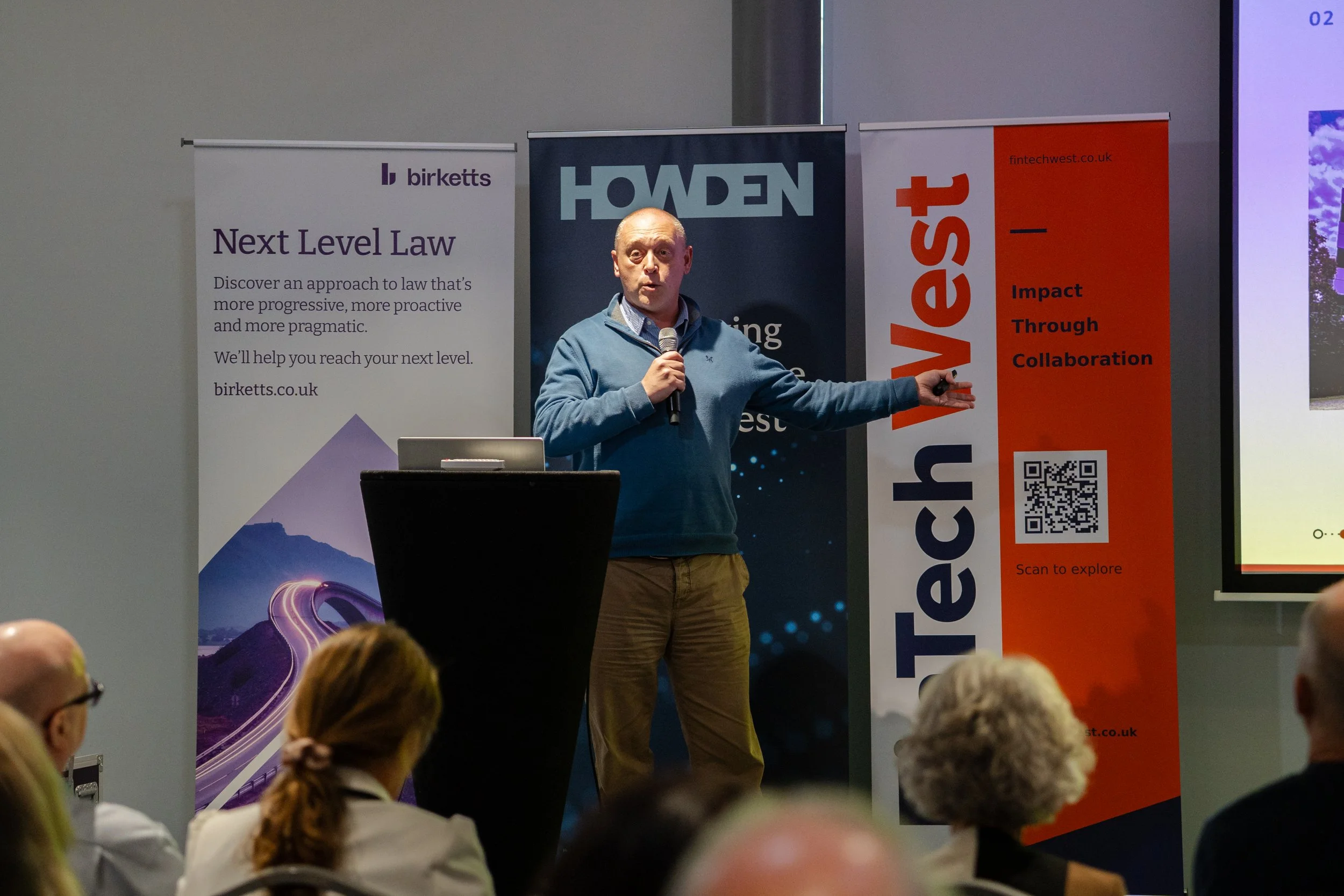
David Davies, CEO of Navos and former CIO of Hargreaves Lansdown, closed the day with a founder’s view of scaling from Bristol. Navos has grown to more than 30 people and 200 clients, without outside funding. David sees Bristol as a real advantage thanks to its talent, connections and lower costs. His advice was to choose customers carefully, resist easy money and avoid competing only on price. He also spoke warmly about the value of the FinTech West community in helping businesses grow.
Making the case, together
The message from speakers, founders, policymakers and partners was consistent: the South West has the people, capital and ideas to succeed, and a stronger collective voice can help unlock more. That is why we published The Growth Catalyst and why we will update it each year. We would love to hear your success stories, data and barriers to growth for the next edition. Thank you to everyone who joined us, and to our Conference sponsors and partners S&W, PEXA UK, Howden and Birketts plus the team at We The Curious.
● Download The Growth Catalyst
● Get in touch to talk about partnering with FinTech West
● Join the FinTech West community and sign up to our newsletter. It's free - just add your email to the box at the bottom of the page